Introduction: The Saint and His Shadow
On 6 April 1947, with the subcontinent already dissolving into sectarian slaughter, Mohandas Gandhi addressed a Hindu audience with the words reproduced above. The setting was anything but abstract. Bengal and Punjab were soaked in blood; refugees carried news of burnt villages, forced conversions, and mutilated bodies across the land. To people living through that catastrophe, Gandhi did not offer a programme of defence, evacuation, or justice. He offered an invitation to die.
For admirers, this utterance is often treated as a tragic anomaly, a moment where an ageing saint allowed mystical rhetoric to outrun political sense. This article takes the opposite view. The April 1947 speech is not a departure from anything. It is the purest expression of a politics Gandhi had been practising, in varying registers, for nearly half a century: a politics that consistently demanded unilateral sacrifice from Indians, above all from Hindus, while leaving colonial and Islamist power structures intact, unchallenged, or actively assisted.
To sustain that claim, we follow Gandhi across five decades and several theatres of conflict. We begin in South Africa in 1899, where he organised Indian stretcher-bearers for the British in the Anglo-Boer War, framing their service as the rightful duty of loyal imperial subjects. We move to 1918, when he volunteered as the Empire’s chief recruiting agent and urged his countrymen to offer “all her able-bodied sons as a sacrifice to the Empire.” We examine the Khilafat agitation of 1920 to 1922 and the Moplah jihad it helped precipitate, tracing his theological turn to absolute ahimsa, his leadership of Quit India in 1942, and his response to the Noakhali atrocities of 1946.
Finally, we return to the climactic year 1947 to 1948: his April sermon on dying bravely, his pressure on the interim government to transfer 55 crores to Pakistan despite its aggression in Kashmir, and his decisive imprimatur on Jawaharlal Nehru’s prime ministership, a choice that entrenched League-aligned and colonial elites in education and public memory, where they sanitised centuries of conquest as “composite culture.”
“Gandhi’s celebrated non-violence repeatedly operated in practice as a demand that Hindus pay, in blood and memory, for other people’s empires and utopias.”
Central ThesisAcross all these episodes a grammar recurs: one side, colonial power, the Ottoman Caliph, the Muslim League, is taken as a fixed presence. The other side, Indians and especially Hindus, must prove worthiness, curb anger, relinquish self-defence, and accept punishment as spiritual refinement. The aim of this essay is to disentangle the halo from the record, and to ask what this consistency cost those required to demonstrate it.
Soldier of Empire: Boer War and Early Loyalism
In the closing years of the nineteenth century Gandhi was a London-trained barrister in Natal, South Africa, contesting racial humiliations with petitions and legal briefs. He was, in the language of imperial politics, a loyal moderate: one who asked for inclusion within the Empire’s hierarchy rather than its dismantlement. When the Anglo-Boer War broke out in October 1899, he saw in it an opportunity. His calculation was explicit: those who claimed the rights of British subjects must shoulder the burdens of imperial defence.
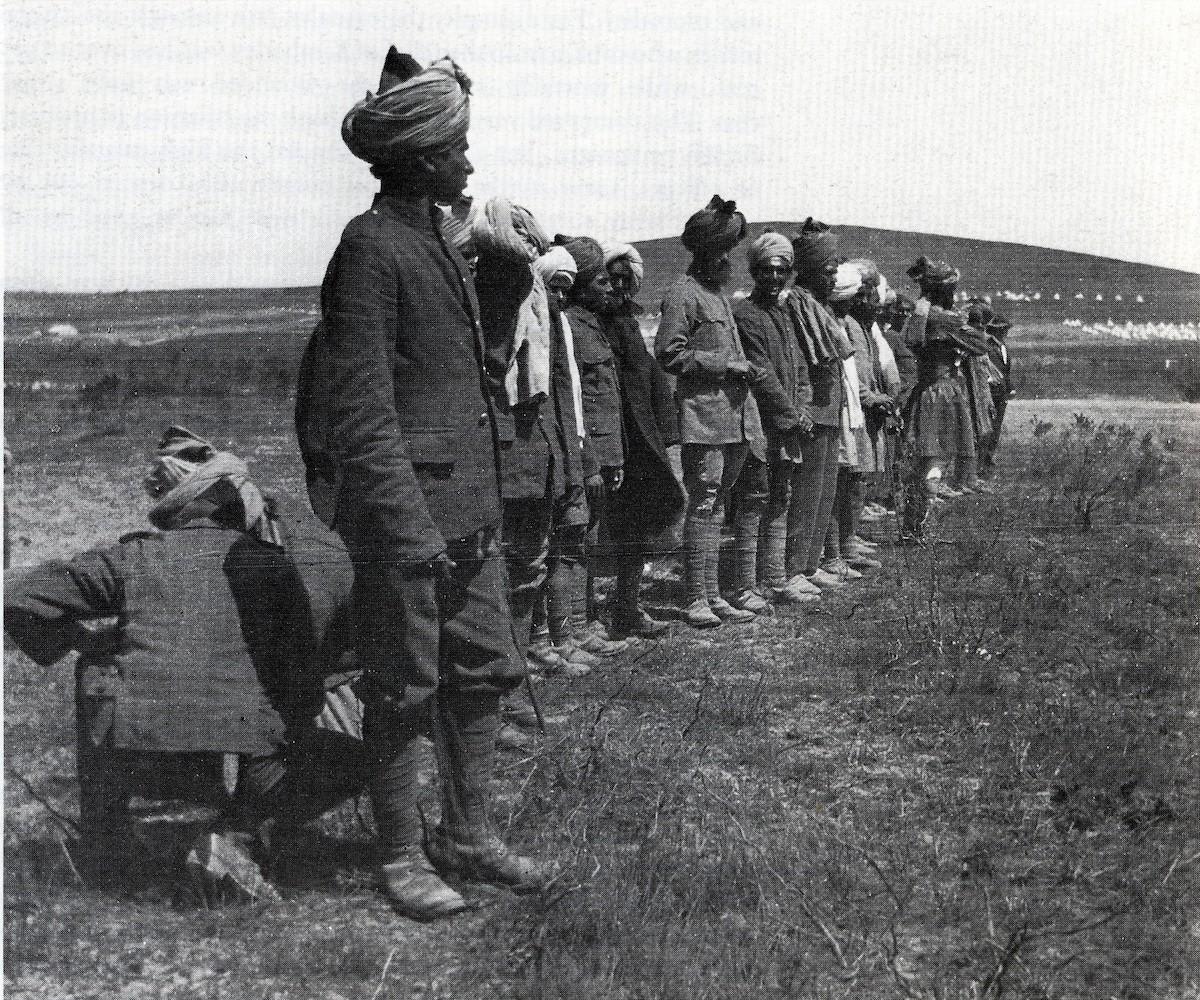
The Natal Indian Ambulance Corps he organised in 1899 to 1900, eventually numbering over a thousand men, served British forces during operations including the relief of Ladysmith. Gandhi later wrote with evident pride that he had “put my life in peril four times for the cause of the Empire, at the time of the Boer War when I was in charge of the Ambulance Corps.” He did not note that the Boers were themselves a colonised people fighting against that same Empire.
“I felt that if I demanded rights as a British citizen, it was also my duty, as such, to participate in the defence of the British Empire.”
M.K. Gandhi, on organizing the Natal Indian Ambulance Corps, 1899What matters here is not the military significance of the corps but the philosophical template it established. Recognition, and therefore rights, must be earned through sacrifice. The Empire is not asked to concede rights on the basis of justice; it is asked to reciprocate a gift of suffering. Indian bodies become tokens in a transaction, offered upward in the hope that the superior power will respond with elevation. That logic did not die in the veld of Natal. The Boer War was not an aberration at the start of an otherwise noble career. It was the prototype.
Blood for Partnership: World War I Recruiting
Two decades later, with Europe consuming itself in industrial slaughter, Gandhi carried his logic back to India at a scale that dwarfed the Natal experiment. In April 1918, at the height of the German spring offensive, the British Viceroy convened a War Conference in Delhi. Gandhi attended despite severe illness and immediately volunteered as the Empire’s chief recruiting agent in India, a role that reveals everything about his conception of political action.
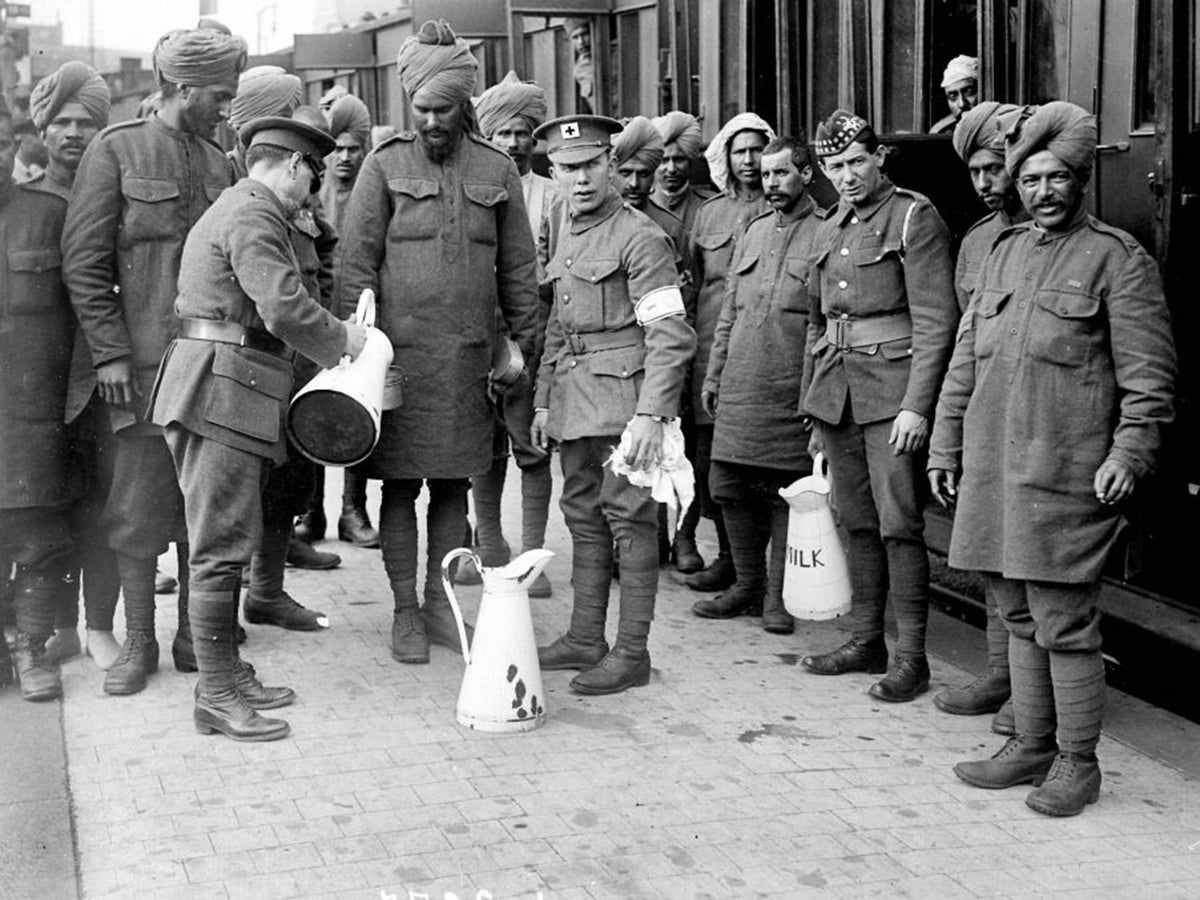
His own autobiography is unflinching. He told the Viceroy’s conference that he would “like India to offer all her able-bodied sons as a sacrifice to the Empire at its critical moment.” He argued that by this act of corporate sacrifice India would “become the most favoured partner in the Empire.” He called it “national suicide” not to recognise this “elementary truth.” And he set out on foot, in failing health, trying to persuade young men, many of them poor peasant farmers with nothing to gain from an Anglo-German war, to enlist for distant battlefields.
“I would make India offer all her able-bodied sons as a sacrifice to the Empire at its critical moment... It will be national suicide not to recognize this elementary truth.”
M.K. Gandhi, War Conference speech, Delhi, 1918By 1918 over one million Indians had already been deployed overseas. The political reward, the Montagu-Chelmsford reforms of 1919, was limited constitutional tinkering, accompanied in the same year by the Rowlatt Act and the Jallianwala Bagh massacre. The transaction Gandhi proposed had a record. Indian blood had been spent at scale, the recognition had not come, and his response was to demand another instalment. The sacrificial currency of bodies was to be offered again, a logic that would eventually be turned not against an imperial enemy but against the Hindu communities Gandhi was ostensibly defending.
Across Boer War, World War I, Khilafat, and Partition, the same grammar recurs: Indian bodies offered as sacrifice to a higher cause, the sufferer always bearing the moral burden of redemption.
Khilafat, Moplah, and the Price of Unity
The post-war years found Gandhi at the head of a genuinely mass movement, and the stakes of his politics grew accordingly. The collapse of the Ottoman Empire generated the Khilafat agitation across the Muslim world, aimed at preserving the Caliphate. In India, Gandhi allied the Congress with Khilafat, declaring it the “duty” of every Hindu to cooperate with their Muslim brethren on the cause. The asymmetry is immediately visible: Khilafat was a religiously exclusive cause to which Hindus had no organic connection, while Swaraj was a secular demand to which all communities could subscribe. One side was being asked to adopt another side’s religious programme.
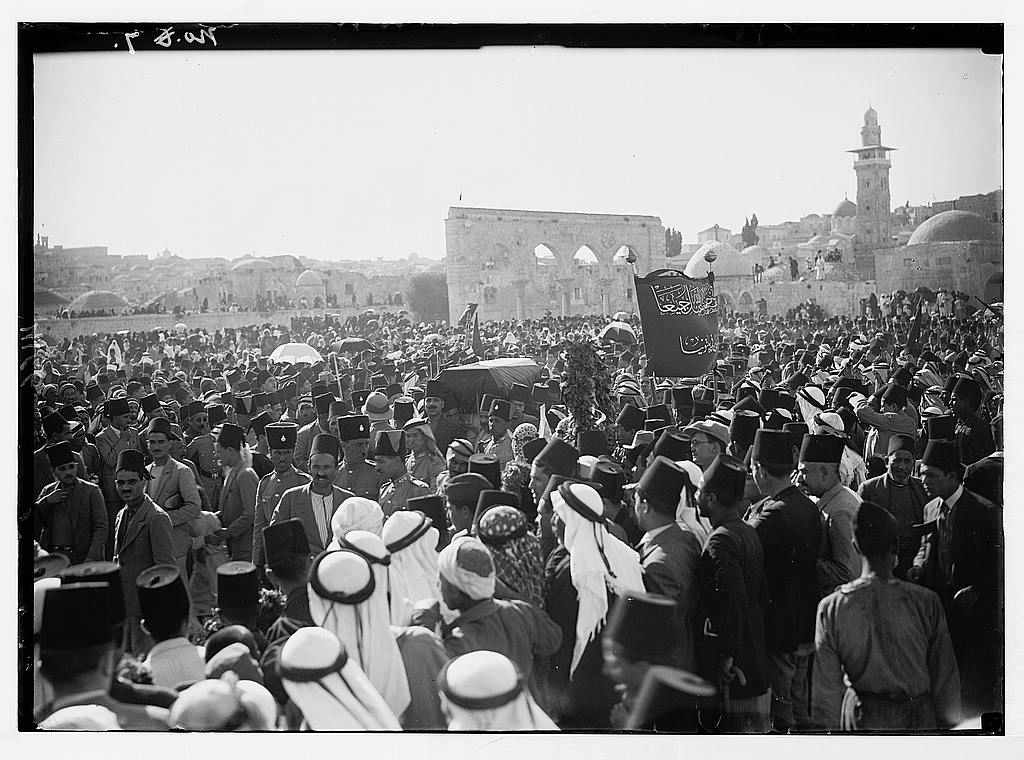
The consequences unfolded most devastatingly in Malabar, where the Moplah Muslim peasantry launched an uprising in 1921 that rapidly mutated into mass violence against Hindu civilians. British and Indian administrative records, as well as independent journalistic accounts, documented systematic killings, forced conversions at sword-point, temple desecration, the rape and abduction of Hindu women, and the mutilation of bodies. The demographic and cultural geography of parts of Malabar was permanently altered.
Gandhi’s responses followed a consistent pattern. He insisted the British had “exaggerated” the violence to sow division. He attributed root cause to peasant structural grievances, not to the ideology of perpetrators. And he directed the moral gaze inward at the victims. Hindus, he argued, should ask whether they had done enough to treat Moplah Muslims as “friends and neighbours,” should purge their hearts of anger, and should refrain from demands for accountability.
“Hindus must find out the causes of Moplah fanaticism... It is no use now becoming angry with the Moplahs or the Muslims in general.”
M.K. Gandhi, on the Moplah genocide, 1921B. R. Ambedkar identified this response as worse than naivety. Gandhi’s determination to preserve the ideological picture of Hindu-Muslim unity led him to minimise and rationalise Muslim communal violence, creating an environment in which perpetrators could act with the implicit assurance that their victims would be counselled to introspect rather than to resist. The Moplah dead were victims not only of the rioters but of a political doctrine that made their suffering instrumental to a project of communal harmony that consistently required only one community to pay its costs.
Between Cowardice and Violence: Theological Turn to Ahimsa
During the 1920s and 1930s Gandhi’s public philosophy underwent a significant deepening. His early loyalism had been transactional: sacrifice in exchange for recognition. Now, under the influence of the Sermon on the Mount, the Bhagavad Gita as he read it, and the Jain ethic of ahimsa, non-violence ceased to be a tactical instrument and became an ontological stance, the constitutive posture of a person who had mastered the self.
His essay “Between Cowardice and Violence” contains a well-known concession: if faced with only the choice between cowardice and violence, he would advise violence. But the force of his argument lies elsewhere. True courage, he insists, consists in facing suffering without retaliation, absorbing injury until the aggressor is “converted” by the spectacle of suffering endured without hatred. Non-violence is presented as accessible only to the spiritually strong.
This framing carries a troubling political implication. Once suffering is construed as spiritual purification, its distribution ceases to be a primary political concern. The person who suffers unjustly becomes, in a sense, the more spiritually advanced party. Justice is not a matter of structural remediation or institutional guarantee; it is a potential by-product of one side’s spiritual performance. The tension between this doctrine and the realities of organised communal violence, where riots are instruments of political advantage rather than abstract moral tests, was obvious to contemporaries. To meet such instruments with an ethic of non-retaliation was, from a strategic perspective, to unilaterally disarm in the face of an adversary who had issued no comparable commitment.
Do or Die: Quit India and World War II
By 1942 Gandhi’s relationship with the British Empire had inverted. No longer petitioning for inclusion, he now demanded immediate and total withdrawal. The Cripps Mission had failed, Japan was advancing through Burma, and in August 1942 Gandhi launched the Quit India movement with a call that became iconic: “Do or Die.” In the speech he announced: “I am the same Gandhi as I was in 1920. My emphasis on non-violence has grown stronger.” The connection was his own.
Despite the martial-sounding slogan, his prescribed instrument remained non-violent mass action: civil disobedience, strikes, boycotts. The sacrificial idiom, willingness to die, to suffer, to endure, remained central. This was not a renunciation of the earlier logic but an update of it: the same sacrificial grammar, now deployed against the Empire rather than for it. The moral burden still fell on Indians. Their readiness to die was still the primary argument.
The tragedy is that a population primed to regard death in a chosen cause as morally ennobling, and accustomed to political problems framed in terms of spiritual endurance rather than institutional remedy, was ill-equipped for the specific horror of Partition, where deaths were not chosen acts of principled witness but imposed massacres, and where the question of whether to flee or stay, to fight or submit, had life-and-death consequences that no sermon could resolve.
Noakhali and the Limits of Moral Appeals
In October 1946 the district of Noakhali in eastern Bengal became the site of a sustained campaign of violence against its Hindu minority. Unlike episodic communal clashes of earlier decades, the Noakhali violence had a systematic character: villages targeted in sequence, Hindu men killed or driven out, women raped and abducted, temples desecrated, survivors coerced into conversion or forced to flee. The scale, pattern, and timing, following the Muslim League’s Direct Action Day, left little room for the “spontaneous clash” narrative.

Gandhi walked through Noakhali on foot, in his late seventies, staying in devastated villages and attempting to restore confidence through his physical presence. He discouraged calls for military intervention or defensive organisation, insisting that “this is not a work where the army or police can be of much help.” He specifically counselled Hindus to remain, to trust their neighbours, and not to treat mass departure as a solution.
“Gandhi refused to call for armed protection and insisted on ‘change of heart,’ counselling victims to conquer fear rather than their attackers. For shattered communities, this was not guidance. It was abandonment.”
Analytical assessment of the Noakhali mission, 1946 to 1947Contemporaries were not persuaded. The Hindu Mahasabha and regional Congress leaders argued for evacuation and security arrangements. Ambedkar saw in Noakhali further confirmation that co-existence under a single polity was not viable for minorities lacking guaranteed protections backed by force. His eventual preference for Partition as a “lesser evil” was shaped in part by the recognition that moral suasion could not substitute for institutional design in conditions of organised communal violence. The moral grandeur of Gandhi’s walking tour was real. Its protective value was close to zero.
“Face Death Bravely”: Gandhi’s Partition Theology
Against this accumulated background, the April 6, 1947 speech is not a momentary lapse in judgment. It is the logical culmination of a theology Gandhi had been constructing since Natal. Hindus must not harbour anger even if Muslims sought their total destruction; if Muslims establish rule over India after killing all Hindus, this would be spiritually acceptable because death embraced with a smile ushers in a “new India.”
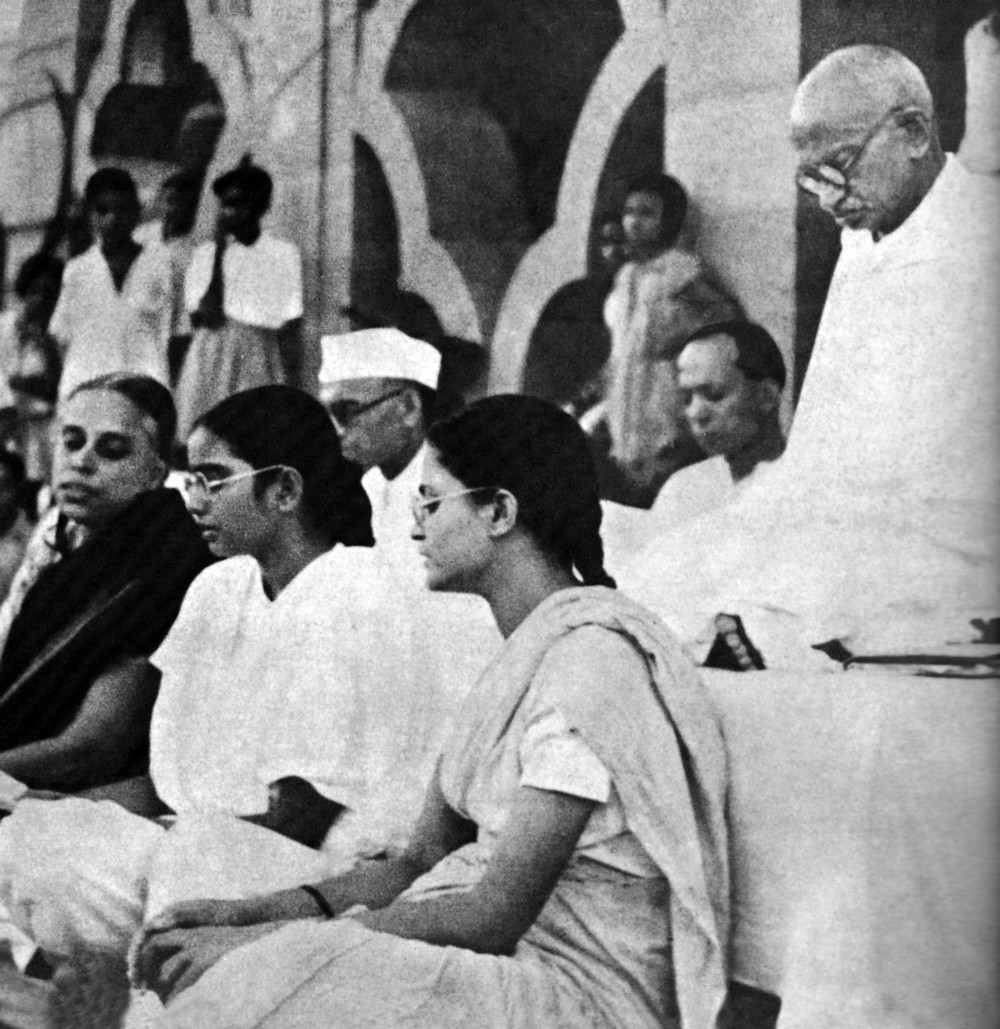
The rhetorical architecture reveals its priorities. The physical annihilation of Hindus, a genocide by any reasonable definition, is presented not as a political emergency requiring institutional response but as an occasion for spiritual performance. The only sin Gandhi appears genuinely worried about is the possibility that Hindus, faced with mass murder, might yield to anger. Their extinction, by contrast, can be reconciled with a smile and narrated as the birth of a new nation. The moral scale is strikingly inverted: resentment is the cardinal sin; dying is the spiritual opportunity.
Similar language can be traced through Gandhi’s correspondence and prayer-meeting speeches throughout the Bengal and Punjab riots of 1946 to 1947. He consistently addressed Hindu suffering through the lens of Hindu obligation, what Hindus must not feel, not do, not claim, while addressing Muslim violence as a problem for Hindus to absorb rather than a problem for the League or the state to prevent. The asymmetry is systemic, not accidental.
“Even a General Massacre Could Be a Day of Thanksgiving”: Gandhi and the Jews Under Hitler
In November 1938, within days of Kristallnacht, the largest anti-Jewish pogrom in peacetime history, Mohandas Gandhi published an essay in his magazine Harijan titled simply “The Jews.” Thousands of Jewish shops had just been destroyed across Germany and Austria, 30,000 Jewish men arrested and sent to concentration camps, and over a hundred Jews murdered in the streets. The world was watching in horror. Gandhi’s response reprised, with uncanny precision, the same grammar he had applied to the Moplah victims of 1921 and would apply to the Noakhali victims of 1946: the sufferers must remain, must not resist, must suffer voluntarily, and must find spiritual joy in their suffering.
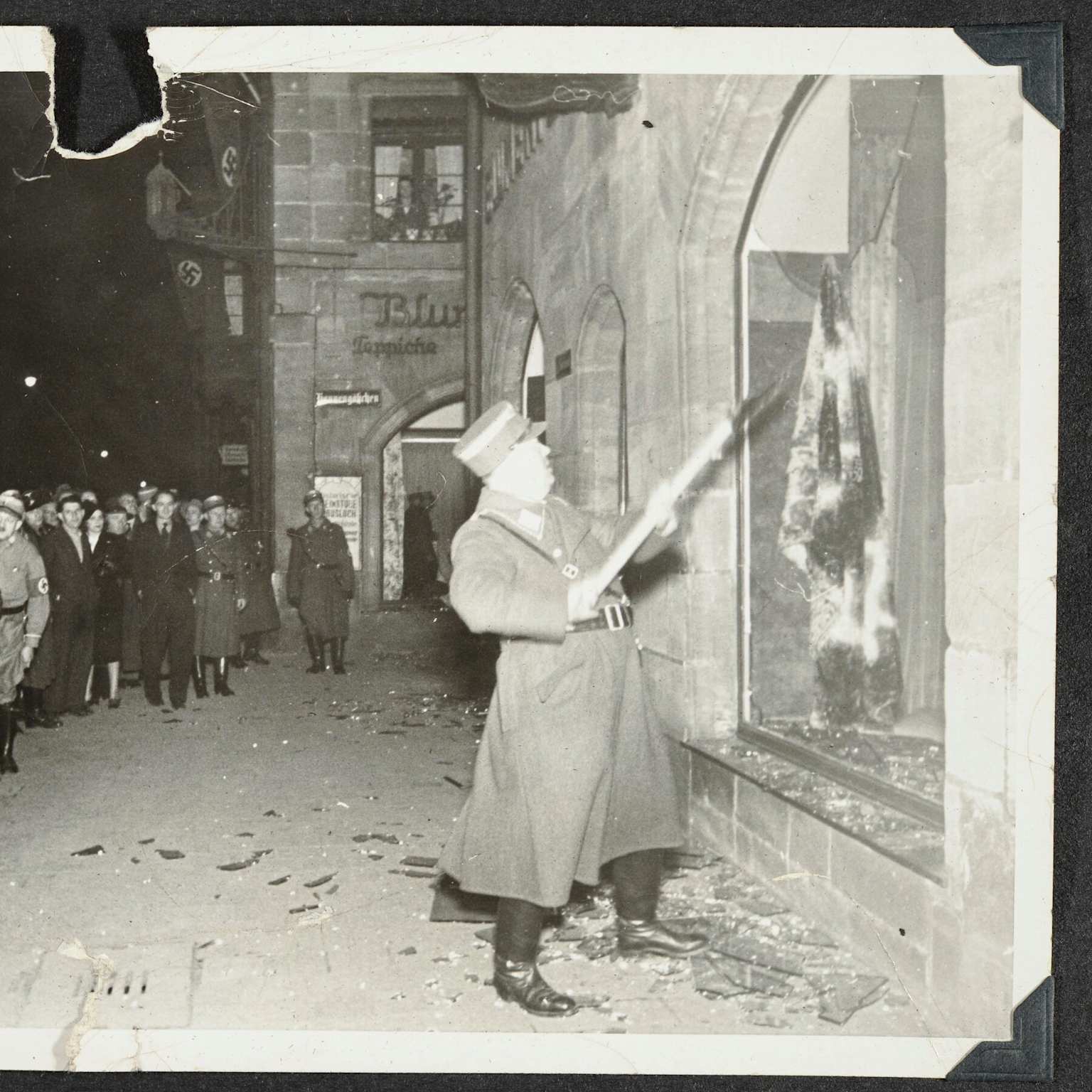
The essay is among the most disturbing documents in Gandhi’s published record. He wrote:
“If I were a Jew and were born in Germany and earned my livelihood there, I would claim Germany as my home even as the tallest gentile German may, and challenge him to shoot me or cast me in the dungeon; I would refuse to be expelled or to submit to discriminating treatment. And for doing this I should not wait for the fellow Jews to join me in civil resistance, but would have confidence that in the end the rest were bound to follow my example. If one Jew or all the Jews were to accept the prescription here offered, he or they cannot be worse off than now. And suffering voluntarily undergone will bring them an inner strength and joy which no number of resolutions of sympathy passed in the world outside Germany can.”
M.K. Gandhi, “The Jews,” Harijan, 26 November 1938He did not stop there. Contemplating the possibility of mass murder, Gandhi did not recoil. He wrote that Hitler’s “calculated violence” might “even result in a general massacre of the Jews,” but “if the Jewish mind could be prepared for voluntary suffering, even the massacre I have imagined could be turned into a day of thanksgiving and joy that Jehovah had wrought deliverance of the race even at the hands of the tyrant. For to the godfearing, death has no terror. It is a joyful sleep to be followed by a waking that would be all the more refreshing for the long sleep.”
The parallel with his April 1947 sermon to Hindus is exact. In 1947 he told Hindus to face Muslim annihilation “with a smile” as the birth of a new India. In 1938 he told Jews to embrace a Nazi massacre as a “day of thanksgiving.” Both groups are invited to find spiritual elevation in their own genocide. Both are instructed that resistance, anger, or self-defence would be spiritually inferior. The suffering victim becomes the moral victor; the exterminator becomes, unwittingly, an agent of the sufferer’s purification. This is not a doctrine of non-violence. It is a theology of annihilation dressed in the language of redemption.
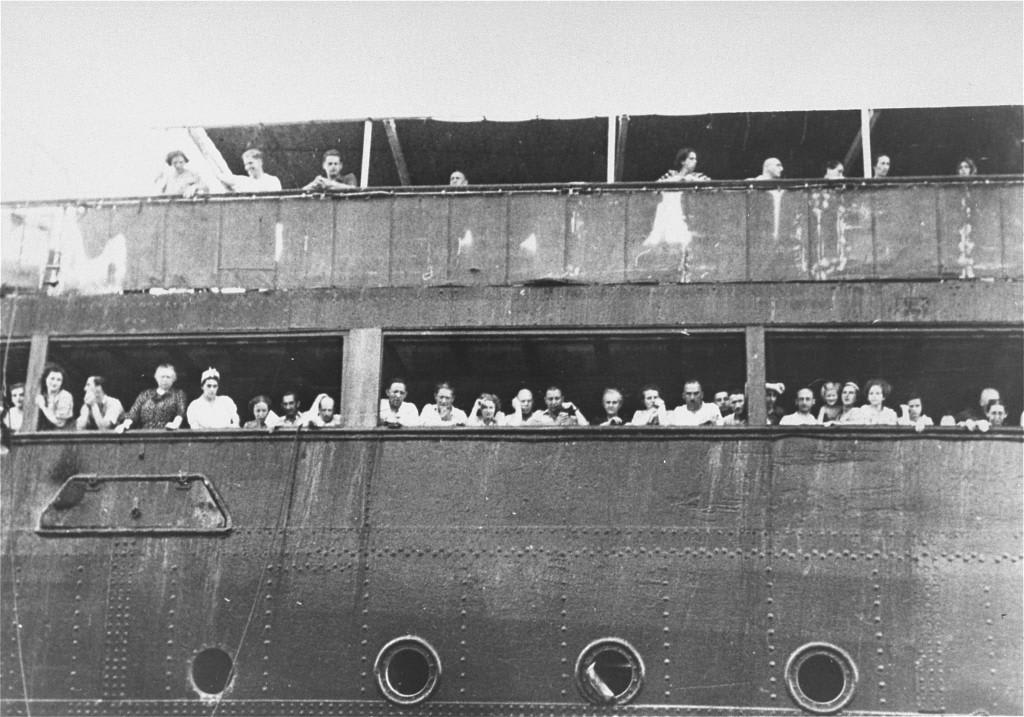
Gandhi also opposed Jewish flight. He insisted Jews “make their home where they are born” rather than seek a national home elsewhere. The cry for Palestine as a refuge “does not make much appeal to me,” he wrote. It would, moreover, be “inhuman to impose the Jews on the Arabs.” With one sentence he foreclosed escape from Germany and with another he foreclosed the one destination that could receive them. He left six million people with a single option: stay, do not resist, and find joy in whatever follows.
On 23 July 1939, weeks before Germany invaded Poland, Gandhi wrote to Adolf Hitler addressing him as “Dear Friend.” He would write again on 24 December 1940, after the fall of France, the Blitz, and the systematic murder of Jews in Poland, again as “Dear Friend,” calling himself Hitler’s “sincere friend.” The second letter mentioned “monstrous acts,” citing the humiliation of Czechoslovakia and the rape of Poland. It did not mention Jews. Defenders of Gandhi note that the “Dear Friend” salutation reflected his principled refusal to harbour hatred even for the worst adversary. The defence is insufficient. A physician does not address a plague as “Dear Friend” while his patients are dying. The gesture of spiritual magnanimity was purchased at the price of moral witness.
“It is one thing to use nonviolent methods against those who would deprive you of some material benefit, but if their basic aim is to deprive you of life itself, how can you resist nonviolently?”
Martin Buber, Open Letter to Gandhi, 24 February 1939The philosopher Martin Buber, writing from Jerusalem on 24 February 1939, where he had recently fled from Germany, replied to Gandhi in a letter that remains one of the most eloquent rebuttals in modern political thought. He did not impugn Gandhi’s sincerity. He argued, with measured precision, that Gandhi had “cast not a single glance at the situation of him whom he is addressing.” Satyagraha, Buber explained, presupposes an adversary with some residual moral conscience that can be engaged. The British colonial administration, for all its violence, governed through institutions, courts, and a professed civilisational ethic. The Nazi state was founded on the elimination of precisely that moral vocabulary. There was no parliament to petition, no press to shame, no officer class with a conscience to appeal to. To counsel satyagraha against a regime whose explicit aim was biological extermination was not courage. It was a failure to see.
Buber’s letter was sent to Gandhi’s ashram. Gandhi never replied. The silence is itself part of the record. The man who wrote thousands of words of counsel for every political situation, who never shrank from expressing views on the Arab-Jewish question, on Palestine, on the Ottoman Caliphate, found no answer for the person who had most directly and carefully challenged his prescription. Six million Jews went to their deaths in the years that followed. Some died “with a smile,” as Gandhi had prescribed. Most did not. None found it a “day of thanksgiving.”
Pakistan, Nehru, and the Post-Colonial State
The institutional legacy of Gandhi’s politics did not end with his sermons. In January 1948 he undertook a fast to pressure the Indian government into releasing 55 crores of rupees, Pakistan’s share of undivided India’s financial assets, at a moment when Pakistani irregulars and regular forces were actively engaged in military operations in Kashmir. India’s interim government had frozen the payment pending resolution of the conflict. Gandhi’s fast forced its reversal.
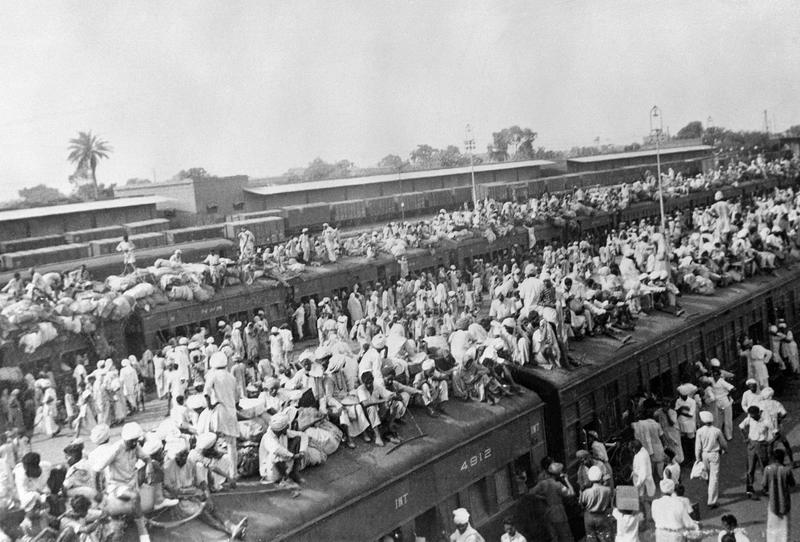
His argument was that India must honour its commitments regardless of Pakistan’s conduct, that the moral credibility of the new nation depended on unilateral good faith. Critics then and since have argued that releasing funds to a state actively waging war against India was not principled generosity but a subsidy for further aggression. Once again, the burden of proof, the cost of demonstration, and the risk of good faith fell entirely on one side.
Gandhi’s role in the succession to the prime ministership was equally consequential. Nehru’s elevation was not the product of a popular election. It resulted from internal Congress dynamics in which Gandhi’s preference was decisive, setting aside Sardar Vallabhbhai Patel, who held markedly different views on Muslim League demands and Kashmir. The Nehruvian state reflected the consolidation of an Anglicised, League-tolerant elite in key institutions of governance, education, and cultural production. The result was systematic softening of the historical record: Moplah became a “peasant uprising,” Noakhali became a “communal riot,” and centuries of conquest were reframed as “composite culture.”
Ambedkar and Savarkar: Contemporary Indictments
Gandhi’s contemporaries were not uniformly entranced by his aura. B. R. Ambedkar and V. D. Savarkar approached him from very different ideological locations yet converged on a crucial diagnosis: that his brand of non-violence systematically normalised Hindu suffering and disabled the community’s capacity for effective self-defence. Their critiques constitute a formidable counter-record that official historiography has largely suppressed.

Ambedkar brought to his analysis of Gandhi the same unflinching empiricism he applied to caste. He documented Gandhi’s responses to specific episodes of Muslim communal violence, Moplah, the Calcutta riots, Noakhali, and found in each case the same pattern: Gandhi minimised the agency of perpetrators, exaggerated Hindu structural culpability, and prescribed Hindu introspection rather than Muslim accountability. The effect was to create an environment in which Muslim communal organisations could act with implicit assurance that their violence would be absorbed, rationalised, and forgiven.
His views on Partition were shaped by this analysis. He did not regard Partition as a tragedy imposed on an unwilling Gandhi but as the predictable consequence of a politics that refused to face the structural incompatibility of Hindu and Muslim communal nationalisms honestly. Gandhi’s sentimental appeals to brotherly love, in Ambedkar’s view, not only failed to prevent Partition but made it more violent, because they prevented the frank negotiation and institutional design that might have produced a safer transition.

Savarkar attacked Gandhi from a diametrically opposed philosophical position. He argued that ahimsa as a political creed was an abdication of dharma, which required the active protection of community, land, and civilisational heritage by all necessary means. To counsel Hindus to accept slaughter without retaliation was not spiritually advanced; it was a sinful misreading of tradition that encouraged conquest and invited continued aggression. Despite their profound disagreements on caste, democracy, and the character of Indian civilisation, Ambedkar and Savarkar align along a single axis: both reject the premise that historical injustice can be remedied by asking its victims to suffer more nobly.
“Gandhi’s brand of non-violence normalised Hindu suffering and disabled the community’s capacity for self-defence. Ambedkar and Savarkar, from opposite poles, both saw this and said so.”
Convergent verdict of two very different criticsConclusion: The Cost of a Saint
From the muddy battlefields of Natal to the prayer meetings of Partition-era Delhi, Gandhi’s political life was threaded by a single demand: that Indians, and above all Hindus, demonstrate their moral worth through sacrifice unbacked by enforceable reciprocity. In 1899, sacrifice was offered to the British Empire. In 1918, it was offered again, at vastly larger scale, in blood on the Western Front. In 1920 to 1922, it was offered to the project of Hindu-Muslim unity, a project defined so that only Hindus were required to make substantive unilateral concessions. In 1946 to 1947, it was demanded from communities already ravaged by pogrom, in the form of forgiveness without justice and trust without protection. And in April 1947, it was demanded in its starkest form: the willingness to die “with a smile” at the hands of those who wished to destroy an entire people.
To trace this arc is not simple iconoclasm. Gandhi was personally brave; his willingness to fast, march, go to prison, and walk through devastated villages in his late seventies was real and remarkable. His influence on anti-colonial politics worldwide was genuine and consequential. But personal courage does not redeem a political doctrine, and influence does not excuse its costs. The question this article has tried to answer is not whether Gandhi was a good man, but whether his doctrine was good politics for those required to live and die by it.
The answer that emerges from the evidence is severe. Gandhi’s sacrificial grammar was not naive idealism that occasionally misfired. It was a consistent structure of thought, applied across five decades and radically different contexts, that systematically identified Indian vulnerability, and Hindu vulnerability in particular, as the appropriate price of political progress. The Empire was to be won over by suffering; the Muslim League was to be conciliated by unilateral generosity; history was to be redeemed by forgetting it. At each stage, the obligation fell on the same community, and the community asked to pay never received the promised return.
Gandhi’s celebrated non-violence repeatedly operated in practice as a demand that Hindus pay, in blood and memory, for other people’s empires and utopias. Whether we call this self-delusion, theological excess, or political malpractice, its consequences were catastrophic for those who could not afford the luxury of martyrdom.
Ambedkar and Savarkar, from opposite ends of the political spectrum, both saw this and said so. Their convergent verdict, that Gandhi’s politics normalised Hindu suffering and disabled Hindu self-defence, deserves a permanent place in the historical reckoning, not as polemic, but as a careful reading of what the record shows.
Gandhi’s halo has not survived the archive intact. The saint and his shadow are inseparable; to see only the light is to be complicit in the darkness it casts. Recovering the full record, the ambulance corps in Natal, the recruiting drives of 1918, the sermons over Moplah graves, the advice to face death bravely in April 1947, the fast that funded an adversary state, is not a task of hatred but of honesty. Only on the basis of that honesty can Indians, and Hindus in particular, reckon with what was demanded of them, and decide, with full knowledge, what they are prepared to give in the future.