
Hinduism offers no religious basis for the modern caste system. What it offers instead is a varna framework , a dharmic orientation assigned by nature at birth, not a hereditary political label. The distinction is not merely semantic: it is the difference between a cosmological psychology and a colonial bureaucratic instrument. The four varnas of Sanātana Dharma , Brahmin, Kshatriya, Vaishya, Shudra , describe four modes through which human beings contribute to the world. The caste system as legally and socially enforced in modern India is something else entirely: a 19th-century administrative fiction that the British census machinery imposed on a vast, fluid society.
This article traces that distinction from its roots in Vedic cosmology through Jyotiṣa (Vedic astrology), explains how the Moon's nakshatra at birth provides a mechanism for natural varna assignment, and draws the sharpest possible line between dharmic varna and colonial caste.
The Four Varnas as Dharmic Orientations
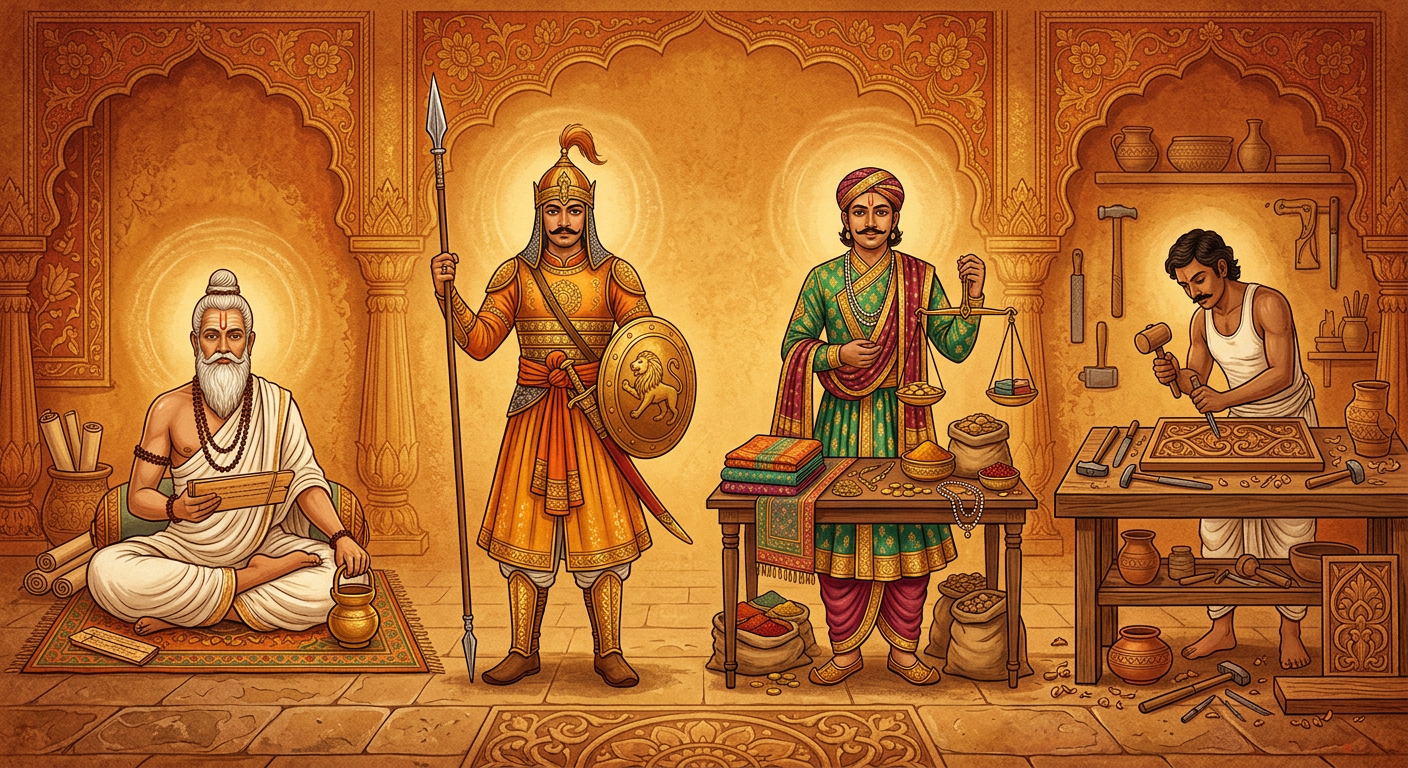
Sanātana Dharma speaks of four varnas , not as fixed birth-castes but as four modes through which human beings contribute to the world. Each describes a temperament, a natural leaning, a way of engaging with dharma.
Creators of Knowledge
Drawn to study, teaching, contemplation, and the preservation of wisdom. The Brahmin orientation is toward meaning , making sense of the cosmos and transmitting that understanding.
Protectors & Organizers
Drawn to courage, governance, and defending dharma. The Kshatriya orientation is toward order , protecting the community and holding the structures that make collective life possible.
Connectors & Traders
Drawn to cultivation, exchange, and building networks of mutual benefit. The Vaishya orientation is toward flow , linking people, resources, and opportunities.
Tradespeople & Artisans
Drawn to hands-on work, craftsmanship, and the practical tasks that support everyone else. The Shudra orientation is toward craft , the embodied skill that turns raw material into useful form.
In this ideal, one fourth of society naturally leans toward each function: one fourth creators, one fourth warriors and leaders, one fourth connectors and traders, one fourth tradespeople and service workers. Each is necessary; none is inherently "polluted" or "inferior." They are four complementary paths toward dharma and, ultimately, moksha. The proportion is not a social policy to be enforced , it is a cosmological observation about the distribution of human temperament.
"One fourth creators, one fourth warriors and leaders, one fourth connectors and traders, one fourth tradespeople and service workers. The sky itself keeps the proportions balanced."
From the author's June 9, 2023 thread on Sanātana DharmaJati Dharma and Kula Dharma
Two Layers of Dharmic Identity
The tradition distinguishes two layers of dharma that together constitute a person's full dharmic profile. Jati Dharma is the dharma given by nature at birth , your starting orientation, the varna in which the Moon places you at the moment you enter the world. Kula Dharma is the dharma you take on through learning, initiation, and profession: the path through gurukula, school, craft, or discipline that you consciously choose.
These two layers are not in conflict. They are sequential: you begin with the orientation your birth nakshatra provides, and through your choices of study and service, you develop a Kula Dharma that may be the same color or a different one. The distinction matters enormously, because it introduces mobility into the system at the level of principle , not as an exception or reform, but as a design feature.
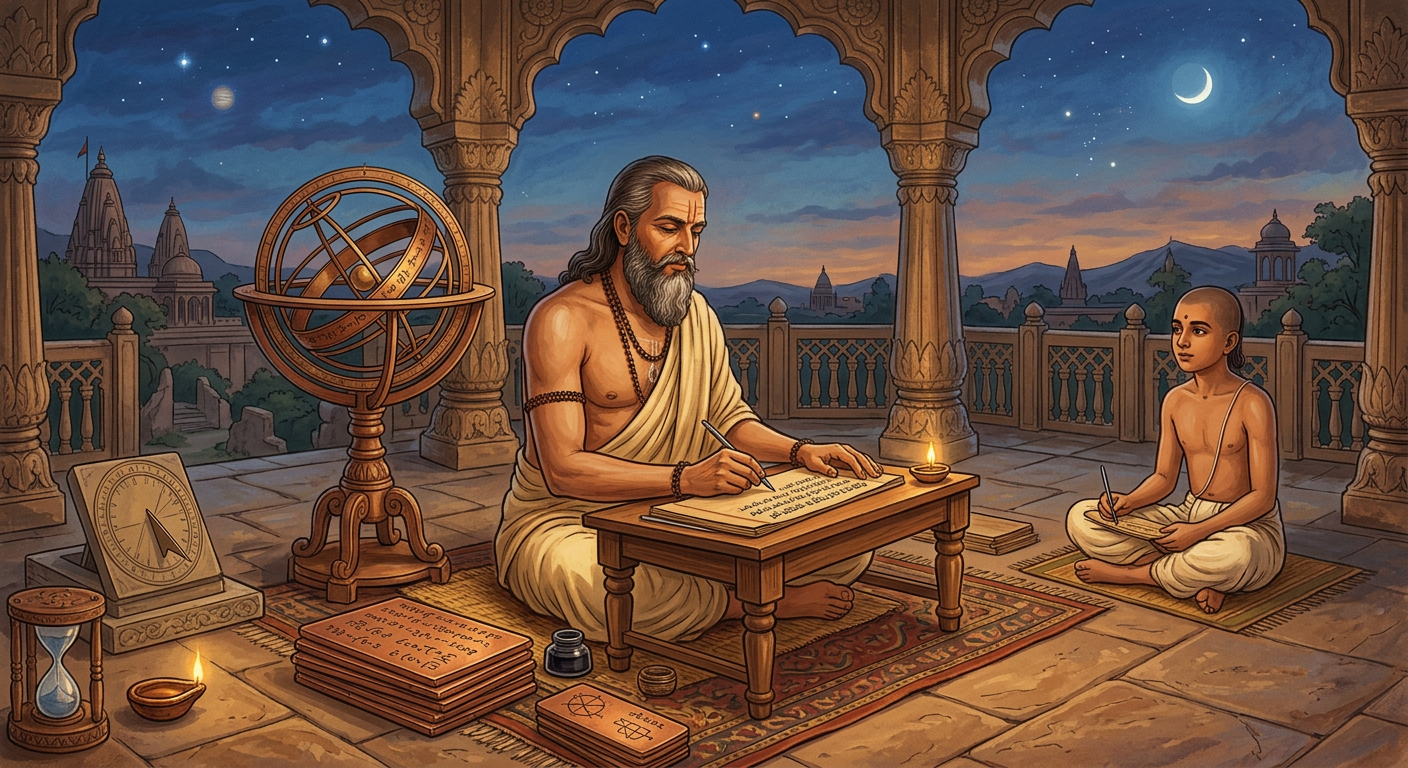
Aryabhata, the fifth-century mathematician and astronomer, is remembered in some accounts as born in a Shudra context , a Shudra birth nakshatra, a craft-and-service orientation. Through learning and teaching, through the long discipline of the gurukula and the observatory, he became an Āchārya: a teacher, a sage, a Brahmin by Kula Dharma. His birth nakshatra remained what it was. His Kula Dharma shifted entirely. The sky offered him a starting point; his tapas and learning provided the rest.
Ancient narratives are full of such transitions: Shudras becoming Brahmins, warriors becoming sages, traders becoming rulers , all by merit, discipline, and learning, not by changing surnames in a census. The system is designed for movement. Varna is mutable: you start with one orientation, but through education and initiation you can live in another. This is the exact opposite of the colonial notion of caste as a permanent birth-cage.
The Nakshatra Wheel: How Nature Assigns Varna
27 Lunar Mansions, Four Dharmic Colors
Jyotiṣa provides a concrete mechanism for this natural assignment. The Moon moves through 27 nakshatras (lunar mansions) in a fixed order, from Ashwini to Revati. In the South Indian tradition, each nakshatra carries a varna quality , Brahmin, Kshatriya, Vaishya, or Shudra , as a statement about temperament, not social rank. At the instant of birth, the Moon sits in one of these colored segments. That nakshatra's varna becomes your Jati Dharma.
The 27 Nakshatras by Varna
The Moon's path through all 27 nakshatras in order. Each segment is colored by its varna quality. Hover or tap any segment to see the nakshatra's name and varna. Your birth nakshatra's color is your Jati Dharma.
The wheel reveals an important structural feature: the four varna groups are distributed across the nakshatras in an interspersed, non-sequential pattern. No varna occupies a single block of the sky. Instead, the colors alternate and intermix, meaning that as the Moon moves through the heavens day by day, it cycles continuously through all four orientations. Every birth window , morning, afternoon, night, any season , has access to all four varna qualities. The sky itself keeps the proportions balanced, as a matter of cosmic arithmetic: 27 nakshatras, distributed roughly equally across four varnas (7, 7, 6, 7), ensures that over time, the varna distribution across births remains stable. No single orientation comes to dominate.
From Birth-Orientation to Chosen Path
Once you understand your birth-varna, the next step is Kula Dharma: the path you choose through study and profession. The birth nakshatra is the soil; Kula Dharma is what you grow in it. The two need not be the same color , and the tradition does not suggest they should be. What matters is conscious choice, not inherited label.
A child born under a Brahmin nakshatra may naturally gravitate to scriptural study, research, or teaching, fulfilling both Jati and Kula Dharma in the same orientation. A child born under a Shudra nakshatra may, through gurukula and initiation, become a teacher, healer, or leader; their Kula Dharma shifts them into Brahmin or Kshatriya function even though their birth nakshatra remains the same. Neither outcome is more dharmic than the other , what matters is that the choice is made consciously, in alignment with one's temperament and capacity, in service of dharma.
"The circle helps readers see that the system is designed for movement: the sky offers a starting point, not a final verdict."
From the author's ShreeHistory thread on varna and nakshatraThis is the deep logic of the gurukula system: the teacher (guru) observes the student's natural temperament , their Jati Dharma , and then guides them toward the Kula Dharma that will best develop their potential. A student born under a Kshatriya nakshatra who has a contemplative mind might be guided toward the warrior-sage path, the philosophical strand of the Kshatriya tradition. A student born under a Vaishya nakshatra with exceptional organizational gifts might be guided toward administrative governance, fulfilling a Kshatriya Kula Dharma. The goal is always the right function in the right place , not the enforcement of birth labels.
Why This Is Not "Caste" as We Know It
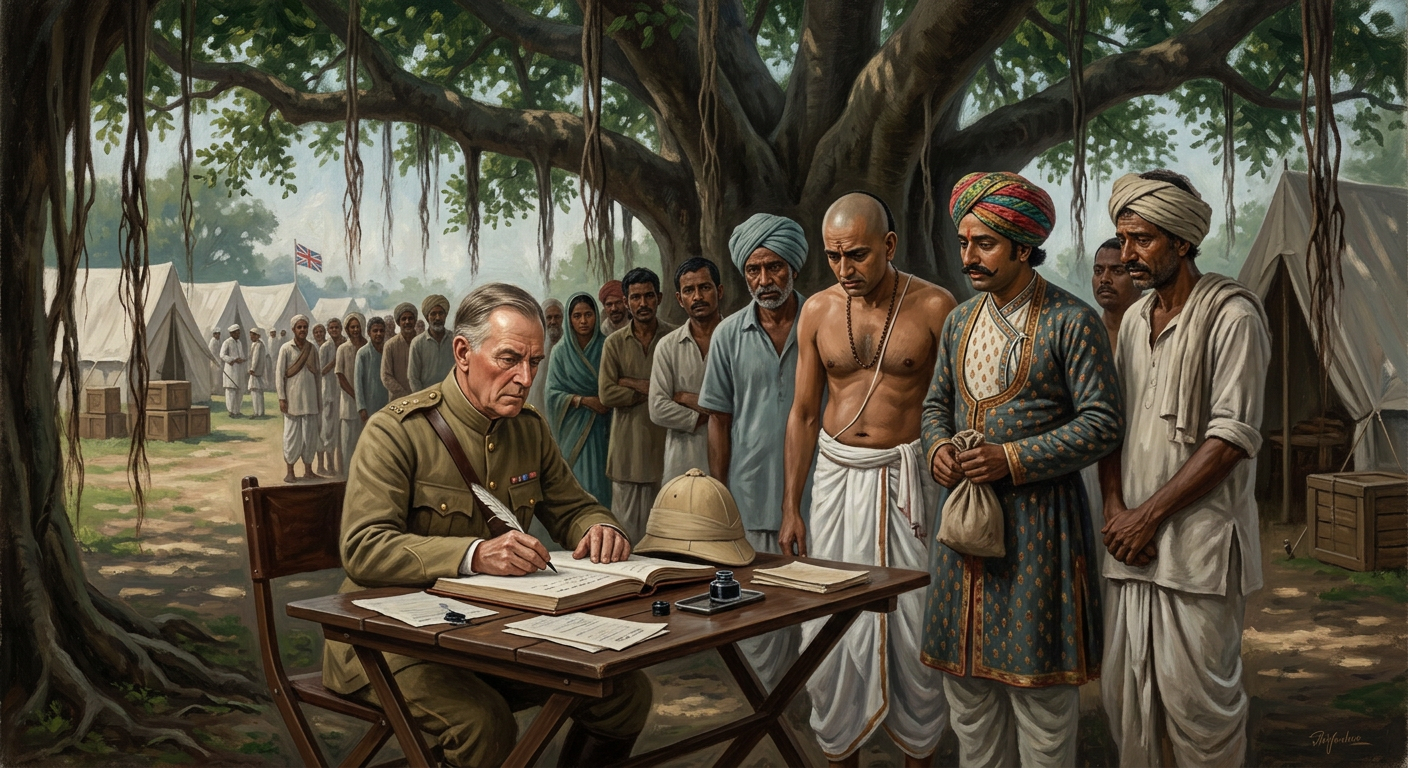
The modern Indian caste system is something quite different from the varna framework described above. As historians have documented, British administrators in the late 19th century , especially from the 1871 census onward , froze a vast variety of jātis into rigid, hereditary "castes," ranked and recorded for taxation, recruitment, and political control. These are the castes you find on official government forms and in reservation schedules today.
"Hinduism did not have castes till the British forcefully clubbed the population into four different castes during the 1871 census. The British, in order to break the civilization and create divisions, instituted the caste system which was completely birth-based and hereditary. This is a political construct."
From the author's original thread , a shorthand for the deeper distinction between dharmic varna and colonial caste| Dimension | Dharmic Varna | Colonial Caste |
|---|---|---|
| Source | The Moon's nakshatra at birth , a cosmic and psychological classification | Bureaucratic enumeration , lists drawn up by colonial officials and missionaries |
| Meaning | A dharmic orientation , how you can best serve and grow in this life | A social box , used to limit where you can live, work, and marry |
| Flexibility | Mutable through Kula Dharma , education, initiation, and profession allow lateral movement | Designed to be birth-fixed , recorded and re-recorded in each census cycle |
| Purpose | Orienting the individual toward their most harmonious contribution to the cosmos | Administrative control , taxation, military recruitment, divide-and-rule politics |
| Hierarchy | No orientation is "polluted" or inferior , all four are necessary and complete | Explicitly ranked, with lower castes subject to structural discrimination |
| Instrument | The nakshatra wheel , a cosmological map of temperament | The census ledger , a bureaucratic register of social rank |
The confusion between these two systems , one a dharmic psychology, the other a colonial instrument , is not accidental. The British administrators who designed the 1871 census deliberately mapped their rigid caste categories onto the loose Sanskrit vocabulary of jāti and varna, giving colonial categories the appearance of deep Hindu legitimacy. The result was a self-fulfilling system: once enumerated, "castes" became political constituencies, then legal categories, then entrenched social identities. The original fluidity of the varna-nakshatra system was not merely forgotten , it was actively suppressed.
Exploring Your Own Jati Dharma
Readers who wish to explore their Jati Dharma through their birth nakshatra can do so in a few steps. The nakshatra wheel above gives you the color; a varna calculator gives you the specific nakshatra name.
How to Find Your Jati Dharma
- 1 Gather your birth details: date, time, and place of birth. The Moon's position is sensitive to time , even a few hours can change the nakshatra.
- 2 Use a varna calculator such as varna.thevedicway.org to determine your Moon's nakshatra and its varna assignment.
- 3 Locate that nakshatra on the wheel above. Its color , blue (Brahmin), red (Kshatriya), green (Vaishya), or orange (Shudra) , is your Jati Dharma: your starting orientation for this life.
- 4 Ask the real question: given this temperament, what path of study, work, and service will you consciously choose? This is Kula Dharma , and the answer belongs to dharma and self-knowledge, not to caste politics.
The nakshatra is not a verdict. It is a compass reading , the direction in which your nature most naturally points. The journey from that starting point to a fully realized Kula Dharma is the work of a lifetime, shaped by education, relationships, tapas, and conscious choice. The ancient system was designed precisely to give every person both a foundation and the freedom to grow beyond it.
The stars offer a starting point. The path belongs to you.
Sources & Further Reading
Bhagavad Gītā (Chapter 4, verse 13) on varna by nature, not birth • Brihat Parāśara Horā Śāstra , foundational text of Jyotiṣa • South Indian nakshatra-varna classification (traditional school) • Nicholas Dirks, Castes of Mind: Colonialism and the Making of Modern India (Princeton, 2001) • Susan Bayly, Caste, Society and Politics in India (Cambridge, 1999) • 1871 Government of India Census Report • Author's original thread on Sanātana Dharma and varna (June 9, 2023)