
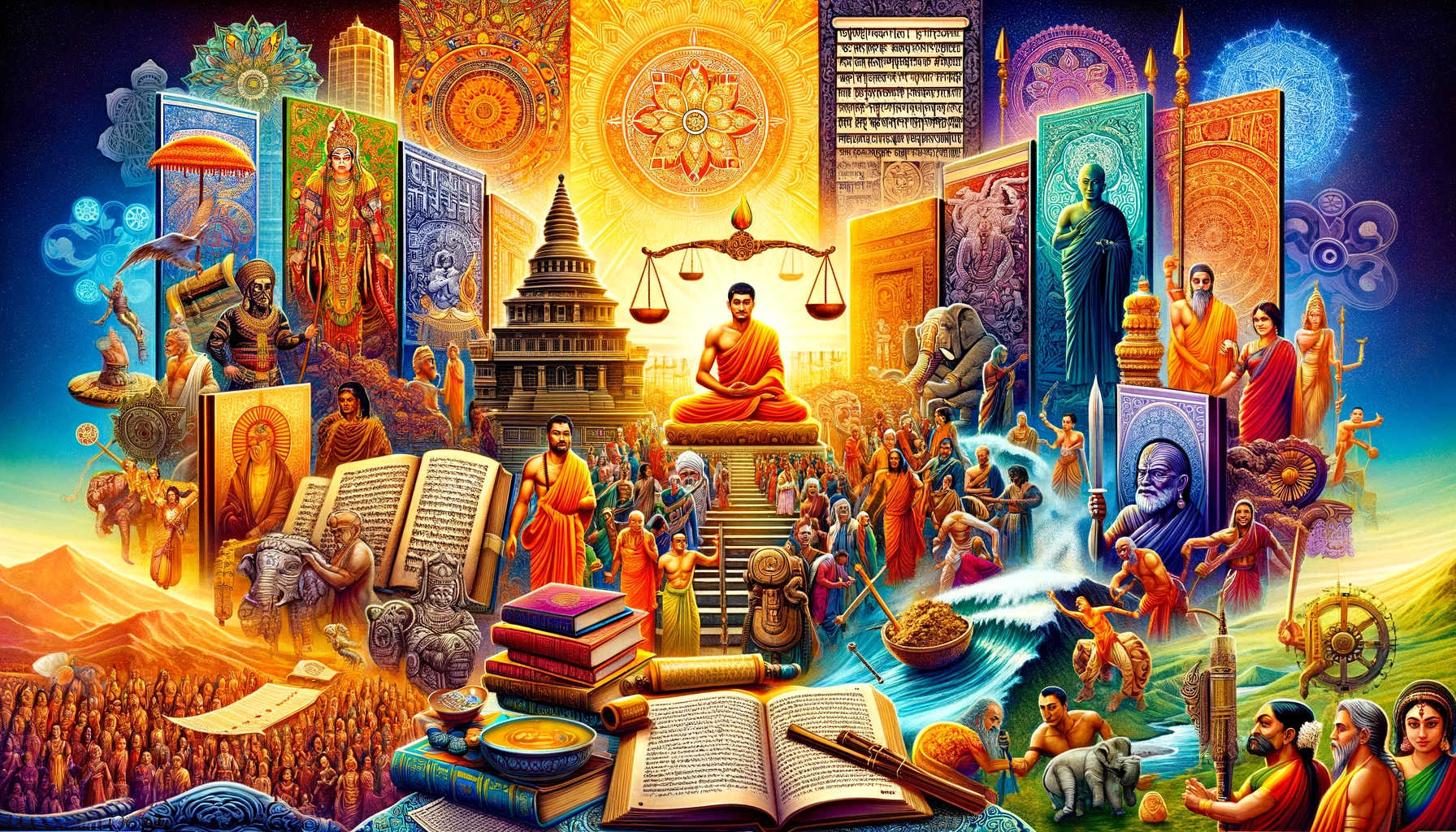
The Continuity of Dharma and Justice in Bharat: An Exploration Through Seminal Works
The concept of Dharma and justice in India has a rich and continuous tradition that can be traced through various seminal texts spanning several centuries. This article aims to explore the evolution and continuity of these concepts through key works such as the Brāhmaṇas, the Dīgha Nikāya, the Arthaśāstra, the Mahāvastu, the Śānti Parva, and the Tibetan Dulva, among others.
The Vedic Period: Brāhmaṇas (circa 800-600 B.C.)
The Brāhmaṇas, a collection of ancient Indian texts with commentaries on the Vedas, are pivotal in understanding the early concepts of Dharma. These texts lay down the ritualistic framework and the duties (Dharma) of individuals within the social and cosmic order. The Brāhmaṇas highlight the importance of adhering to one's duties and the consequences of straying from them, thus establishing an early foundation for justice.
Pre-Maurya Period: Dīgha Nikāya and Arthaśāstra
The Dīgha Nikāya, part of the Sutta Piṭaka of the Pāli Canon, dates back to the pre-Maurya period. It contains discourses attributed to the Buddha and reflects on ethical and moral teachings that emphasize right conduct and justice. The Buddha's teachings on compassion, non-violence, and the ethical treatment of all beings contribute significantly to the broader understanding of Dharma.
The Arthaśāstra of Kauṭilya (Chanakya), a treatise on statecraft and military strategy, also originates from this period. It provides a comprehensive guide on governance, emphasizing the ruler's duty to uphold justice and ensure the welfare of the people. The Arthaśāstra outlines legal and economic policies, reinforcing the state's role in maintaining Dharma through justice.
Early Christian Era: Mahāvastu and Śānti Parva
The Mahāvastu, a Buddhist text, belongs to the first century B.C. and offers insights into the life and teachings of the Buddha. It further elaborates on the principles of Dharma, focusing on the moral and ethical duties of individuals and rulers alike. The text underscores the importance of justice as a component of righteous living.
The Śānti Parva, a section of the Mahābhārata, covers the period from the first three or four centuries of the Christian era. It is a critical discourse on the duties of kings and the principles of governance. The Śānti Parva, particularly its rajadharma section, discusses the responsibilities of a ruler in maintaining order and justice, highlighting the continuity of these concepts from ancient to early medieval India.
Later Texts: Tibetan Dulva and the Smṛti Texts
The Tibetan Dulva, containing the life of the Buddha, and the Smṛti texts, which include Manu, have significant overlaps in their treatment of justice and Dharma. The Dulva continues the narrative of ethical and moral teachings, while the Smṛti texts provide a legal framework that governed societal conduct and justice. These texts were instrumental in shaping the legal and moral codes that persisted in Indian society.
Influence of External Cultures
The inclusion of references to the Greeks, Śakas, and Pahlavas (Parthians) in the Śānti Parva indicates the interaction between Indian and external cultures. These interactions enriched the Indian concept of Dharma and justice, integrating diverse perspectives while maintaining the core principles.
English learnt Justice and Judicial System
It is the Sanskrit word Yash was corrupted by the Europeans as justice. The modern jurisprudence, rules for evidence, contract law all originated from India. I have written about this earlier.
Why Dharma has to be basis of Justice and Judicial System
The continuity of Dharma and justice in Bharat is evident through the exploration of these seminal works. Each text contributes to the evolving understanding of these concepts, reflecting the dynamic yet enduring nature of Indian philosophical and legal traditions. The emphasis on duty, ethical conduct, and the role of rulers in upholding justice remains a consistent theme, underscoring the intrinsic nature of these principles in Indian society.
By examining these texts, we can appreciate the profound and lasting impact of the concepts of Dharma and justice, which continue to influence Indian thought and governance to this day.
What I shared today is continuity of the thought for the longest time. It is high time Indian judiciary threw away all the false notions collected from its colonial past and become the true heir to three-thousand-year-old (as documented) system of Dharma.