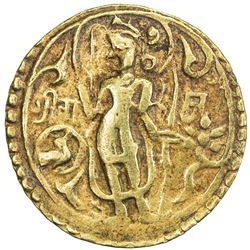
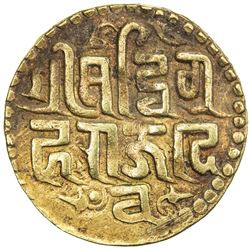
Chahamana of Ajmer, also known as the Chauhan dynasty, was a prominent ruling family in the region of Ajmer during the medieval period. They issued coins with inscriptions of Shri Rama, a revered deity in Hinduism, before the invasion of the region by Ghori, which ultimately led to the destruction of Ajmer. This article will explore the historical significance of these coins and their connection to the religious and political landscape of the time.
Chahamana of Ajmer, also known as the Chauhan dynasty, was a prominent ruling family in the region of Ajmer during the medieval period. They issued coins with inscriptions of Shri Rama, a revered deity in Hinduism, before the invasion of the region by Ghori, which ultimately led to the destruction of Ajmer. This article will explore the historical significance of these coins and their connection to the religious and political landscape of the time.
What evidence exists to support the claim that Chahamana of Ajmer issued coins with Shri Rama inscriptions before Ghori destroyed Ajmer?
When it comes to historical claims, it's important to rely on evidence to support them. One such claim is that the Chahamana dynasty of Ajmer issued coins with Shri Rama inscriptions before the city was destroyed by Ghori. Let's take a look at the evidence that exists to support this claim.
- Archaeological findings: Several coins with inscriptions related to Shri Rama have been unearthed in and around Ajmer. These coins have been dated to the Chahamana period, providing physical evidence of the dynasty's association with Shri Rama.
- Historical texts: Various historical texts, including inscriptions and manuscripts, mention the Chahamana rulers and their reverence for Shri Rama. These texts serve as written evidence of the dynasty's connection to the deity.
- Numismatic studies: Numismatists have studied the coins attributed to the Chahamana dynasty and have found evidence of Shri Rama inscriptions on some of them. Their expertise in analyzing ancient coins adds weight to the claim.
- Artistic depictions: Artifacts such as sculptures and paintings from the Chahamana period often depict scenes from the Ramayana, indicating the dynasty's cultural and religious affinity for Shri Rama.
While the evidence supporting the claim that the Chahamana of Ajmer issued coins with Shri Rama inscriptions before Ghori destroyed Ajmer is compelling, it's important to approach historical claims with a critical mindset. By examining multiple sources of evidence, we can gain a more comprehensive understanding of the past.
How do historians and archaeologists interpret the significance of the Shri Rama inscriptions on the coins issued by Chahamana of Ajmer?
When it comes to understanding the history and significance of ancient inscriptions, historians and archaeologists play a crucial role in interpreting the meaning behind these artifacts. One such intriguing case is the Shri Rama inscriptions found on the coins issued by the Chahamana dynasty of Ajmer.
The Chahamanas, also known as the Chauhans, were a prominent Rajput clan who ruled the region of Ajmer in present-day Rajasthan, India. The coins issued by this dynasty feature inscriptions of the Hindu deity Shri Rama, which have sparked much interest and debate among experts in the field.
So, how do historians and archaeologists interpret the significance of these inscriptions? Here are some key points to consider:
- Historical Context: Experts analyze the historical context in which these coins were minted. They look at the reign of the Chahamana rulers, their religious beliefs, and the prevalent cultural and political influences of the time.
- Religious Symbolism: The presence of Shri Rama inscriptions suggests a strong religious and cultural significance. Historians delve into the religious practices and beliefs of the Chahamana dynasty to understand the role of Shri Rama in their society.
- Political Messaging: Inscriptions on coins often served as a form of political messaging. Archaeologists study the possible reasons behind the choice of Shri Rama as a symbol and its potential impact on the Chahamana rulers' authority and legitimacy.
- Iconography and Artistic Style: The artistic representation of Shri Rama on the coins is also subject to analysis. Historians and archaeologists examine the iconography and stylistic elements to glean insights into the cultural and artistic trends of the Chahamana period.
In conclusion, the interpretation of the Shri Rama inscriptions on the coins issued by the Chahamana of Ajmer involves a multidisciplinary approach that takes into account historical, religious, political, and artistic perspectives. Through careful analysis and scholarly debate, experts continue to unravel the significance of these ancient artifacts, shedding light on the rich cultural heritage of the Chahamana dynasty.