Correcting Historical Narratives: The Legacy of Vigraharaja IV's Coinage
In the vast tapestry of Indian history, certain periods and artifacts hold a profound significance that goes beyond their immediate context. One such artifact is the coinage from the reign of Vigraharaja IV of the Chahamanas of Sakambhari, a ruler who reigned around 1150-1164 CE. This coin not only offers a glimpse into the political and cultural milieu of its time but also provides an opportunity to address and correct historical narratives that have often been oversimplified or misrepresented.
The Coinage of Vigraharaja IV
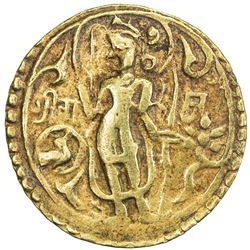
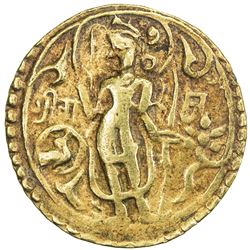
The coin in question features a striking depiction of Lord Rama on its obverse side. The image of Rama is not merely symbolic; it is laden with cultural and historical significance. Rama is shown holding an arrow in his right hand and a bow in his left, surrounded by trees and vines. Notably, the hamsa bird is depicted to the left, and a lotus to the right, with the legend "Sri Rama" inscribed in Devanagari script.
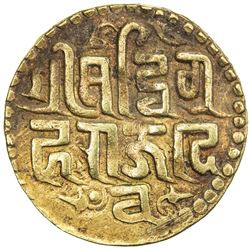
The reverse side of the coin bears the Devanagari legend "Srimad Vigraharaja Deva," affirming the ruler’s divine right and connection to the lineage of Lord Rama. This assertion of lineage is not only a statement of religious and cultural identity but also a political claim to legitimacy and continuity.
Historical Context and Significance
Vigraharaja IV was succeeded by a line of rulers including Amaragangeya, Prithwiraja II, Someshvara, and ultimately Prithwiraja III. The defeat of Prithwiraja III by Muhammad Ghori in 1192 CE is a well-documented event that led to significant changes in the Indian subcontinent, including the establishment of Islamic rule in parts of India. This period witnessed substantial upheaval and transformation, often marked by narratives of conquest and conflict.
However, the coinage of Vigraharaja IV offers a different perspective. It underscores the cultural and historical continuity that existed prior to these upheavals. The depiction of Rama, reflects the 14 years Rama spent in exile seeking the assistance of vanara army, symbolizing loyalty and devotion. This aspect of the coin reinforces the deep-rooted cultural narratives that persisted despite political changes.
Reclaiming Historical Narratives
In contemporary discourse, it is crucial to revisit and reclaim such artifacts that offer a more nuanced understanding of history. The connection of the Chahamanas to Lord Rama is a significant assertion of their cultural and religious heritage, one that has often been overshadowed by later historical events.
By highlighting such connections, we can challenge and correct anomalies in historical narratives. The emphasis on lineage to Shri Rama serves as a reminder of the rich and diverse cultural heritage that predates and coexists with later historical developments. It is a call to acknowledge and celebrate the complexities of Indian history, rather than reducing it to a series of conquests and conflicts.
Conclusion
The coinage of Vigraharaja IV is more than just a monetary artifact; it is a testament to the cultural and historical identity of the Chahamanas. It reflects their connection to ancient traditions and their assertion of legitimacy through divine lineage. By bringing such artifacts to light, we can contribute to a more balanced and comprehensive understanding of history, one that honors the diverse and multifaceted heritage of India.