
The Kadambas of Goa: Unveiling a Legacy of Ancient Trade through Coinage
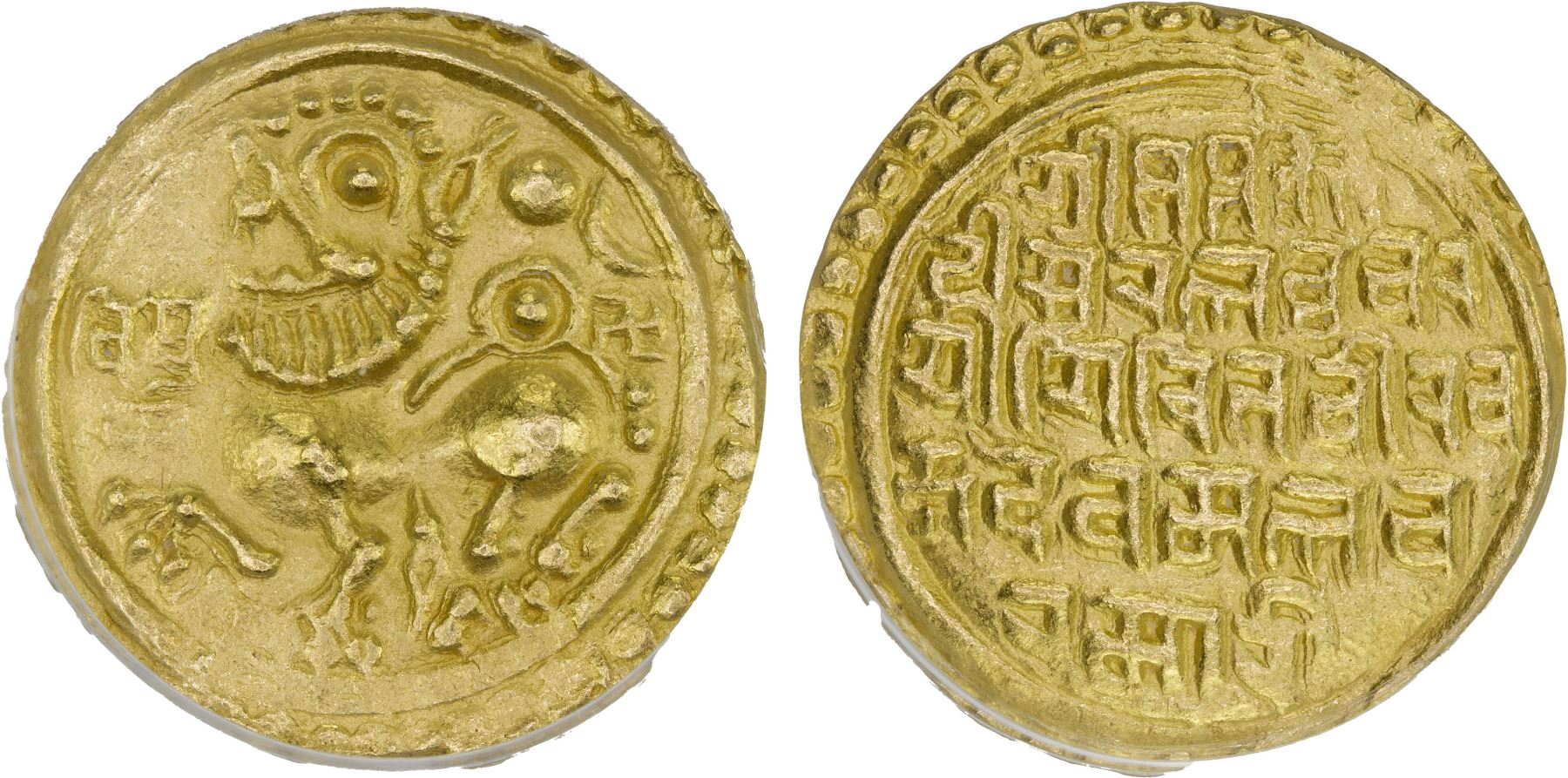
The Kadambas of Goa, an influential dynasty in ancient India, offer a remarkable glimpse into the region's rich history and economic prowess through their meticulously crafted coins. Among the notable examples is a gold pagoda from the reign of King Sivachitta, circa 1147/8-1181 AD, which stands out not only for its historical value but also its exquisite craftsmanship and the insights it provides into the era's trade and culture.
The Coin's Description and Historical Context This particular gold pagoda, struck in the year named "Chitrabhanu," which corresponds to 1162/3 AD, features a majestic lion standing left, symbolizing strength and sovereignty. The lion raises its right front leg, with symbolic elements such as the sun, crescent, and swastika adorning the right side, and the cyclical date "chitrabha" (a tentative reading) inscribed in Nagari script on the left. The obverse of the coin bears a profound inscription in Sanskrit, extolling King Sivachitta as "Vajradeva, the brave destroyer of the Malavas," and highlighting his divine favor from "Saptakotisvara" (a form of Shiva).
Significance of the Inscription The inscription is a powerful testament to King Sivachitta’s military prowess and divine endorsement, which were pivotal in legitimizing his rule and reinforcing the socio-political order. Such inscriptions also serve as valuable resources for historians, offering insights into the religious and cultural dynamics of the period.
Implications for Trade Coins like this gold pagoda not only facilitated trade by providing a stable and trusted medium of exchange but also acted as tools of propaganda and legitimacy for the ruling class. The high-quality gold used in the coin and the intricate details of the strike suggest a flourishing economic climate under the Kadambas, with extensive trade networks that possibly extended beyond the Indian subcontinent.
Conclusion The coin from the Kadambas of Goa is more than just a medium of economic exchange; it is a cultural artifact that narrates the story of a dynasty that skillfully navigated the complexities of governance, trade, and cultural identity. As we delve deeper into such artifacts, we uncover layers of human endeavor and ingenuity that have shaped the historical landscape of regions like Goa.
This comprehensive approach to understanding the coin not only highlights its historical and aesthetic value but also underscores the interconnectedness of commerce, culture, and governance in the ancient world.