The Taiping Rebellion: A Secret History of the Bloodiest Civil War

    The Taiping Rebellion: A Secret History of the Bloodiest Civil War

    Introduction

    The Taiping Rebellion, led by Hong Xiuquan, is often considered the bloodiest civil war in history, resulting in the deaths of an estimated 20 to 30 million Chinese. This article explores the origins, major events, and lasting impact of this devastating conflict.

    Content Warning

    The historical resources referred to in this post reflect the racial prejudices and biases of the era in which they were created. Some items include language and imagery that may be offensive, oppressive, and cause upset. These views are not condoned by Shreehistory.com, but we are committed to providing access to this material as evidence of the inequalities and attitudes of the time period.

    Origins of the Taiping Rebellion

    Christian Missionary Efforts

    Christian missionary efforts in China picked up momentum in the 19th century, with figures like Robert Morrison playing prominent roles. Arriving in Macau in 1807, Morrison published a Chinese translation of the Bible and compiled a Chinese dictionary for English speakers. However, Christianity was banned in China five years later, leading to severe consequences for Chinese Christians, including slavery for those who refused to renounce their faith. Despite his efforts, Morrison only managed to directly convert 25 people during his 27 years in China.

    The Role of the Opium Wars

    The Opium Wars altered the balance of power in China, forcing the Chinese emperor to sign treaties allowing Christianity to be practiced openly. This shift paved the way for missionaries to spread their religion more aggressively, often using local elements and Confucian teachings to gain acceptance.

    The Rise of Hong Xiuquan

    Vision and Leadership

    Hong Xiuquan, a Christian convert who believed he was Christ's younger brother, initiated the Taiping Rebellion after a vision in 1837. By the 1840s, he and his followers had evangelized in Guangdong and Guangxi provinces, eventually raising large armies that captured around 600 cities and conquered Nanjing in 1853. Declaring himself Heavenly King in 1851, Hong made Nanjing the capital of a holy nation.

    The Rebellion and Its Impact

    Massive Violence and Bloodshed

    Despite its name, the Taiping Rebellion brought about widespread violence and bloodshed. The rebellion resulted in one of the deadliest conflicts in history, with an estimated 20 to 30 million people killed. The rebellion involved brutal battles, sieges, and massacres, causing immense suffering and destruction.

    Social and Economic Disruption

    The rebellion severely disrupted Chinese society and economy. Agricultural production collapsed, leading to widespread famine and starvation. The destruction of infrastructure and constant warfare further impoverished the population.

    Authoritarian Rule

    The Taiping government, under Hong Xiuquan's leadership, became increasingly authoritarian. Strict laws and harsh punishments were imposed, and dissent was not tolerated. This contradicted their initial claims of equality and justice.

    Religious Intolerance

    While the Taipings promoted a version of Christianity, they were intolerant of other religions and traditional Chinese beliefs. Temples were destroyed, and practitioners of other faiths were persecuted, undermining their message of creating a harmonious society.

    Internal Strife and Corruption

    The Taiping leadership was plagued by internal strife, power struggles, and corruption. This weakened their ability to govern effectively and further alienated the population they sought to liberate.

    The Legacy of the Taiping Rebellion

    The Taiping Rebellion had a profound and lasting impact on Chinese society. It significantly weakened the Qing Dynasty, contributing to its eventual collapse and the subsequent rise of Communist China. The conflict also left deep scars on Chinese society, disrupting communities and displacing millions of people.

    Conclusion

    Although the Taiping Rebellion claimed to strive for "great peace," it brought about widespread violence, suffering, and authoritarian rule, making it the complete opposite of the peaceful and just society it aimed to establish. This hidden history sheds light on the complexities and consequences of the bloodiest civil war in human history.

    References for Researchers

    • Philip L. Wickeri, “Christianity and the Origins of the Taiping Movement: A Study in the Function of the Social Function of Religious Symbols,” Ching Feng 19:1 (1976), p. 13, 30, 26.
    • Jonathan Spence, God’s Chinese Son: The Taiping Heavenly Kingdom of Hong Xiuquan, p. 176, 345fn24, 32, 225, 48, 232, 292, 257, 233.
    • Reilly, The Taiping Heavenly Kingdom: Rebellion and the Blasphemy of Empire, p. 77, 11, 51, 55, 154, 114, 95, 96, 111, 108-9.
    • Curwen, Taiping Rebel: The Deposition of Li Hsiu-ch'eng, p. 11, 222, 222 note 58.
    • Shih, The Taiping Ideology: Its Sources, Interpretations, and Influences, p. 356, 357, 132, 466, 340, 89, 358.
    • Cambridge, The Cambridge History of China, p. 136-137.
    • Fairbank, China: A New History, p. 137, 269.
    • George Grant, The Changing of the Guard (Ft. Worth, TX: Dominion Press, 1987), pp. 50-51.
    • Chieu, The Tao of Chinese Religion (Lanham, Maryland: University Press of America, 1984), p. 28.
    • Y. P. Mei, "The Basis of Social, Ethical, and Spiritual Values in Chinese Philosophy" in The Chinese Mind, p. 324.
    • N. F. Gier, Spiritual Titanism: Indian, Chinese and Western Perspectives (Albany, NY: SUNY Press, 2000), esp. chaps. 9, 10, and 11; “On the Deification of Confucius,” Asian Philosophy 1:3 (1993), pp. 43-54; “From Mongols to Mughals: Religious Violence in India from the 9th-18th Centuries” at www.class.uidaho.edu/ngier/mm.htm.
    • William J. Hail, Tsen Kuo-Fan and the Taiping Rebellion (New Haven, CT: Yale University Press, 2nd ed, 1964), p. 98.
    • Jen, China’s Taiping Rebellion, p. 163, 128, 160.
    • Cheng, The Taiping Rebellion and the Western Powers: A Comprehensive Survey, pp. 74-75, 77, 85, 89, 90.
    • James H. Cole, The People Versus the Taipings: Bao Lisheng's "Righteous Army of Dongan" (Berkeley: Institute of East Asian Studies, 1981), pp. 24, 1, 45, 46, 33, 53, 56.

    Note

    This post is an ongoing research project and will be updated as we discover more about the Taiping Rebellion and its impacts.

    The Impact of British Missionaries in China: A Civilizational Crisis

    The arrival of British missionaries in China during the 19th century marked a period of significant upheaval and conflict, with far-reaching consequences for Chinese society and its cultural values. The most devastating manifestation of this turmoil was the Taiping Rebellion, a catastrophic civil war that resulted in the deaths of millions and the erosion of China's civilizational foundations.

    The Advent of British Missionaries

    The British missionaries arrived in China during a time of growing Western influence, following the Opium Wars (1839-1842 and 1856-1860) that had already destabilized the region. These missionaries sought to spread Christianity, viewing it as their divine duty to convert the Chinese people. The most prominent among these early missionaries were individuals like Robert Morrison, who arrived in China in 1807, and Hudson Taylor, who founded the China Inland Mission in 1865. Their efforts to spread Christianity were often met with resistance from the Chinese populace, who were deeply rooted in their own religious and philosophical traditions such as Confucianism, Buddhism, and Taoism.

    Hong Xiuquan and the Taiping Rebellion

    The most dramatic and tragic consequence of missionary activity in China was the rise of Hong Xiuquan, the leader of the Taiping Rebellion. Hong was a failed scholar who, after encountering Christian texts provided by missionaries, experienced a series of visions in which he believed himself to be the younger brother of Jesus Christ. Convinced that he was divinely appointed to overthrow the ruling Qing Dynasty and establish a new, Christian-inspired order, Hong began to preach his unique interpretation of Christianity.

    Hong's message resonated with the disaffected masses, who were suffering from economic hardship, natural disasters, and corruption within the Qing administration. The movement he founded, the Taiping Tianguo (Heavenly Kingdom of Great Peace), quickly gained momentum, and by 1853, the Taiping forces had captured Nanjing, declaring it their capital.

    Devastation and Cultural Loss

    The Taiping Rebellion became one of the deadliest conflicts in history, with estimates of the death toll ranging from 20 to 30 million people. The rebellion left a trail of destruction across southern China, devastating cities, farmlands, and communities. The conflict also led to significant cultural losses, as many historical sites, texts, and artifacts were destroyed in the chaos.

    The Taiping Rebellion did not only result in physical devastation but also contributed to a profound cultural and spiritual crisis. Hong Xiuquan's version of Christianity sought to replace traditional Chinese beliefs with a new religious and social order. This was perceived as an assault on China's civilizational values, which had been shaped over millennia by Confucian, Buddhist, and Taoist teachings. The rebellion's suppression by the Qing Dynasty eventually restored order, but the scars left by this conflict ran deep, altering the course of Chinese history.

    The Role of British Missionaries

    British missionaries, though not directly responsible for the Taiping Rebellion, played a significant role in the events that led to this tragic period. Their introduction of Christian texts and ideas provided the foundation for Hong Xiuquan's radical reinterpretation of Christianity. Furthermore, the broader Western imperialistic ambitions and the imposition of unequal treaties eroded Chinese sovereignty and contributed to the social and political instability that fueled the rebellion.

    The activities of British missionaries in China must be viewed within the broader context of Western colonialism and its impact on non-Western societies. While some missionaries genuinely sought to improve the lives of Chinese people through education and medical care, their efforts were often intertwined with the objectives of Western imperialism, leading to unintended and devastating consequences.

    Learning for India

    The legacy of British missionary activity in China is a complex and contentious chapter in the nation's history. While the missionaries aimed to spread their faith and provide humanitarian aid, their presence also contributed to one of the most devastating conflicts in Chinese history—the Taiping Rebellion. This rebellion not only resulted in the loss of millions of lives but also inflicted a deep cultural wound, challenging and eroding the civilizational values that had long defined Chinese society. The story of the Taiping Rebellion serves as a somber reminder of the far-reaching and often unintended consequences of cultural and religious imperialism.

    In Bharat there are demands now to align with China. Often a parallel is made comparing Bharat's civilizational state with China's. Please note China's civilization died after the Taiping Rebellion and what we see now is basically an imperial state created by Chinese Communist Party. 

    Yudhishthira and the Dog

    In the final book of the Mahabharata, the Mahaprasthanika Parva, the Pandavas, having ruled righteously, decide to renounce their kingdom and embark on their final journey to the Himalayas. As they ascend the mountains, one by one, they fall, leaving only Yudhishthira to continue. Along the way, a dog starts following Yudhishthira.

    Despite losing his brothers and Draupadi, Yudhishthira remains steadfast, accompanied by the faithful dog. At the end of his journey, he encounters Indra, who invites him to ascend to heaven in his chariot. Yudhishthira, however, refuses to leave the dog behind.

    Indra attempts to persuade Yudhishthira to abandon the dog, saying it is not fitting for him to take a dog to heaven. Yudhishthira replies:

    भक्त तयागं पराहुर अत्यन्तपापं; तुल्यं लॊके बरह्म वध्या कृतेन | तस्मान नाहं जातु कथं चनाद्य; तयक्ष्याम्य एनं सवसुखार्थी महेन्द्र | |

    Translation: bhakta tyāgaṃ prāhur atyantapāpaṃ: Renouncing a devotee is said to be an extreme sin. tulyaṃ loke brahma vadhyā kṛtena: Equivalent to killing a Brahmin in this world. tasmān nāhaṃ jātu kathaṃ canādya: Therefore, I shall never under any circumstances. tyakṣyāmy enaṃ svasukhārthī mahendra: Abandon him for my own happiness, O great Indra.

    Yudhishthira's steadfast loyalty to the dog exemplifies his adherence to Dharma. Upon hearing this, the dog reveals its true form—it is Yama, the god of Dharma. Yama praises Yudhishthira for his unwavering commitment to righteousness and allows him to ascend to heaven.


    Staying Loyal to Dharma: Lessons from Yudhishthira's Journey

    The story of Yudhishthira and the dog serves as a profound lesson on the importance of staying loyal to Dharma. In this context, Dharma refers to the moral and ethical duties that sustain order and righteousness in the universe.

    The Test of True Character

    Yudhishthira's journey with the dog is not merely a physical one but a test of his character. Despite facing immense personal loss and the allure of heavenly rewards, Yudhishthira remains committed to his principles. His refusal to abandon the dog highlights a core tenet of Dharma: loyalty to those who depend on us.

    Dharma Over Desire

    In our daily lives, we are often faced with choices that test our integrity. Yudhishthira's decision underscores the importance of prioritizing Dharma over personal desires. His willingness to sacrifice his own entry to heaven for the sake of the dog illustrates the depth of his commitment to righteousness.

    The Broader Implication of Dharma

    The Mahabharata teaches that Dharma is not confined to grandiose acts but is reflected in our everyday decisions and actions. Yudhishthira's loyalty to the dog, a seemingly small creature, is a reminder that our duty extends to all beings, regardless of their status or significance.

    The Reward of Righteousness

    The revelation that the dog is Yama, the god of Dharma, symbolizes the ultimate validation of Yudhishthira's actions. It conveys that staying true to Dharma, even when it appears difficult or unrewarding, ultimately leads to spiritual and moral fulfillment.

    Takeaway

    Yudhishthira's story is a timeless reminder of the importance of loyalty and adherence to Dharma. It calls upon us to act with integrity, compassion, and steadfastness in our daily lives. By embodying these virtues, we not only uphold the principles of Dharma but also contribute to the greater good of society.

    Let us reflect on this profound lesson and strive to incorporate it into our lives, staying true to our values and duties, regardless of the challenges we face.

    The Plunder of India's Archaeological Heritage: Cunningham and Maisey's Legacy

    Introduction

    The mid-19th century marked a period of intense archaeological activity in India, driven by the interests of British colonial officers and scholars. Among the most notable figures were Alexander Cunningham and Frederick Charles Maisey. Their work, while significant in documenting India's rich cultural heritage, was marred by practices that today would be considered unethical and exploitative. This article delves into how Cunningham and Maisey acquired, transported, and profited from Indian archaeological artifacts, and the subsequent controversy surrounding a supposed shipwreck that necessitates further investigation.

    The Division of Spoils

    Alexander Cunningham and Frederick Charles Maisey conducted extensive excavations at Sanchi, one of the most important Buddhist sites in India. They divided the relics based on personal preferences: Cunningham, with a keen interest in inscriptions and archaeological details, and Maisey, who favored items of artistic value. This division underscored their differing approaches and motivations.

    Transporting the Relics

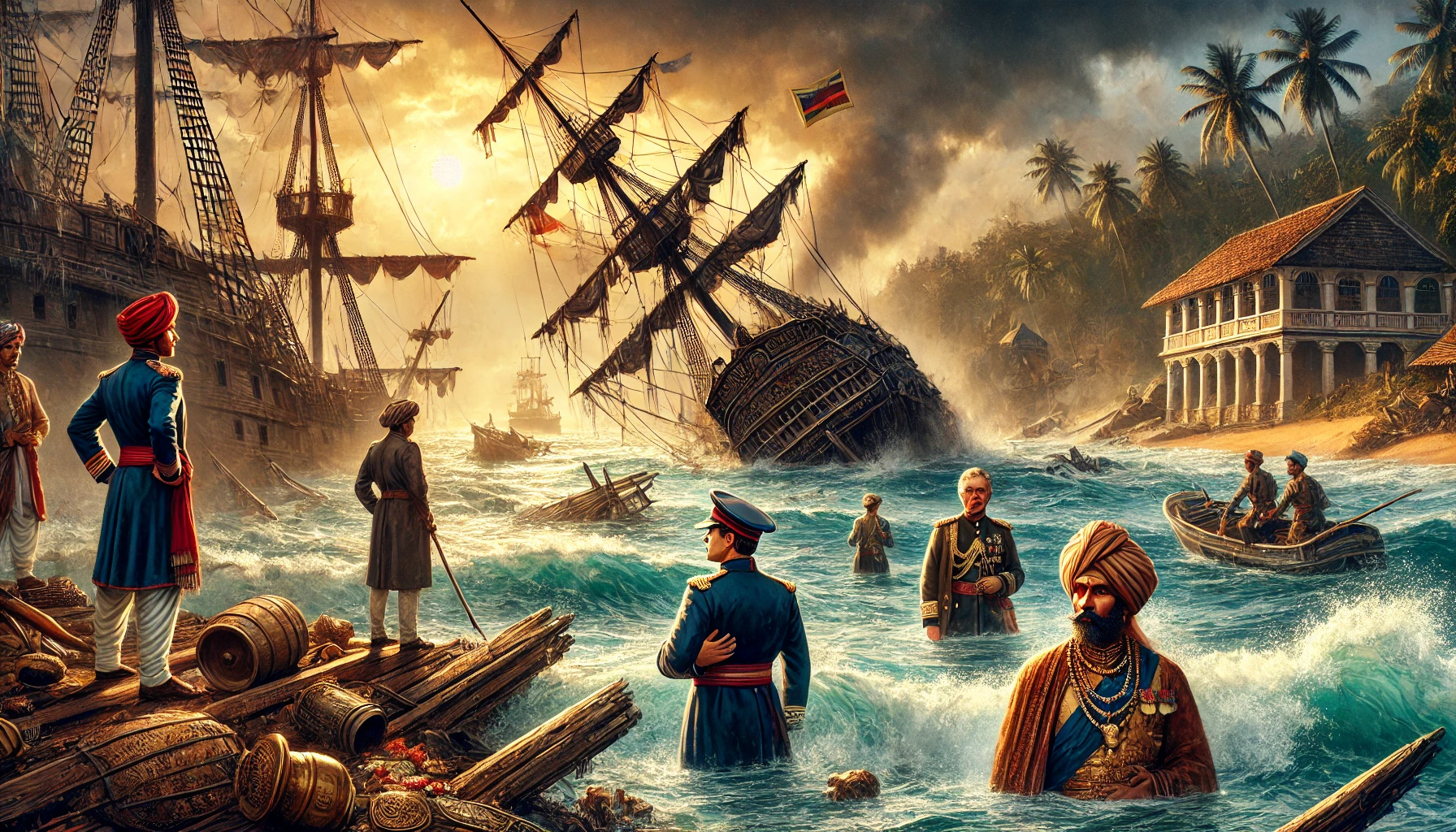
    Once acquired, Cunningham and Maisey arranged for the transport of these relics to England. Cunningham's shipment faced a significant setback when one of the ships reportedly sank near Jaffna, in present-day Sri Lanka. This incident, often cited in historical records, suggests a substantial loss of archaeological treasures. Maisey, on the other hand, made separate arrangements to ensure his collection reached England safely.

    The Controversy of the Shipwreck

    The shipwreck near Jaffna has been a topic of intrigue and skepticism. Historical accounts indicate that a portion of Cunningham's collection was lost at sea. However, the lack of detailed records and physical evidence has led to speculation about the true fate of these relics. Some historians and marine archaeologists argue that the shipwreck narrative could have been a cover-up for the illegal sale or laundering of artifacts.

    The Call for Marine Excavation

    To debunk the shipwreck theory, there is a pressing need for marine excavation at the supposed site near Jaffna. Advances in underwater archaeology could help locate the shipwreck and potentially recover artifacts, providing concrete evidence to support or refute the historical account. Such an excavation would not only clarify the fate of Cunningham's collection but also shed light on the broader practices of artifact transportation and acquisition during the colonial period.

    The Profit from Cultural Heritage

    Both Cunningham and Maisey profited significantly from their acquisitions. The artifacts they transported to England became valuable additions to museum collections, including the British Museum and the Victoria and Albert Museum. These institutions benefited from the cultural and monetary value of the artifacts, while India was left bereft of its heritage.

    Ethical Considerations and Repatriation

    Today, the actions of Cunningham and Maisey are viewed through a critical lens. The acquisition and removal of artifacts from their countries of origin raise important ethical questions. There is a growing movement advocating for the repatriation of cultural artifacts to their rightful places. The case of Cunningham and Maisey highlights the need for museums worldwide to engage in transparent dialogues about the provenance of their collections and the potential for returning artifacts to their countries of origin.

    The Mayan calendar was a complex system used by the ancient Maya civilization for various purposes such as astronomy, religious rituals, and record-keeping. It consisted of several interconnected cycles of different lengths, with the most important being the Tzolk'in and the Haab'.

    The Tzolk'in was a 260-day calendar made up of two smaller cycles: the 20-day week called "Weeks" or "Suns", represented by a dot, and the 13-day month called "Days", represented by a bar. These two cycles aligned approximately every 52 years, creating what the Maya called a Calendar Round.

    The Haab' was a 365-day solar calendar divided into 18 months of 20 days each, plus an additional period of 5 days called the "Wayeb" at the end of the year. The Haab' months were named after various activities or aspects of life.

    In addition to these calendars, the Maya also used a long-count calendar that recorded the passage of time in relation to a starting point called the "0 Date". This calendar was composed of three parts: the Bak'tun (a period of approximately 394 years), the B'akab'tun (a period of approximately 7,882 years), and the Piktun (a period of approximately 52,000 years).

    The Mayan numeral system was one of the most advanced of its time, using just three symbols - dots for 1, bars for 5, and a shell symbol for zero. This allowed them to record dates accurately and make complex calculations for their calendar systems.

    In summary, the Mayan calendar was a sophisticated system with various cycles that intertwined with religious, astronomical, and cultural aspects of Maya society.

    © 2024 ShreeHistory.com. All Rights Reserved.

    Please publish modules in offcanvas position.